

If you’re wondering why your legs feel heavy when running, then you’re in the right place.

That “ugh, why do my legs feel like cement blocks” feeling can happen for all kinds of reasons, and sometimes the cause isn’t as obvious as you’d think.
Don’t worry, we’ve got you covered. In this article, we’ll walk through the most common reasons your legs might feel heavy when running and some tips of how to prevent and fix it.
Why Are My Legs Heavy When Running?
It can be very frustrating to have tired legs when you’re just starting out as a runner or putting in a lot of miles to train for a big race.
Heavy leg days may be an inevitable price for training. You’re growing stronger and building up your leg muscles, but your legs are continually recovering from the training load.
The heavy leg sensation usually develops during your most intense training weeks and fades away following a rest day.
It’s the persistently heavy legs that cause problems. When you never seem to recover from one day to the next and your legs are always heavy and fatigued after a run.
This is the time to look into the causes of heavy legs during jogging. When you find the cause, it’s usually an easy fix.
What Causes Heavy Legs When Running?
There are many possible causes of leg fatigue, and not all of them are obvious. For example, we know that if you did heavy strength training for lower body on Monday it could very well mean that Tuesday’s run feels a little slower with a heavy feeling as your muscles are still trying to recover.
But when it’s less obvious, we need to look at everything you do before or after a run.
When it comes to running, everything from your food to your fueling methods has an effect on how your legs feel.

Let’s look at the top possible causes of why your legs feel heavy when running and what you can do to prevent and fix it.
1. Overtraining
If you frequently experience heavy legs, it could indicate that you are overtraining.
Pushing too hard without hitting pause ever puts extra stress on your body. This can happen if you increase your mileage too quickly, stack too many intense workouts or races or jump into training too soon after time off.
We especially see this a lot with newer runners who are excited to get started wanting to do all the things, but more often than not, going at turbo speed usually backfires.
Remember, training plans are meant to be flexible. Use them as a guide, not a rule book. Adjust your plan based on how your body feels, or better yet, work with a running coach who can tailor the plan to your specific needs.
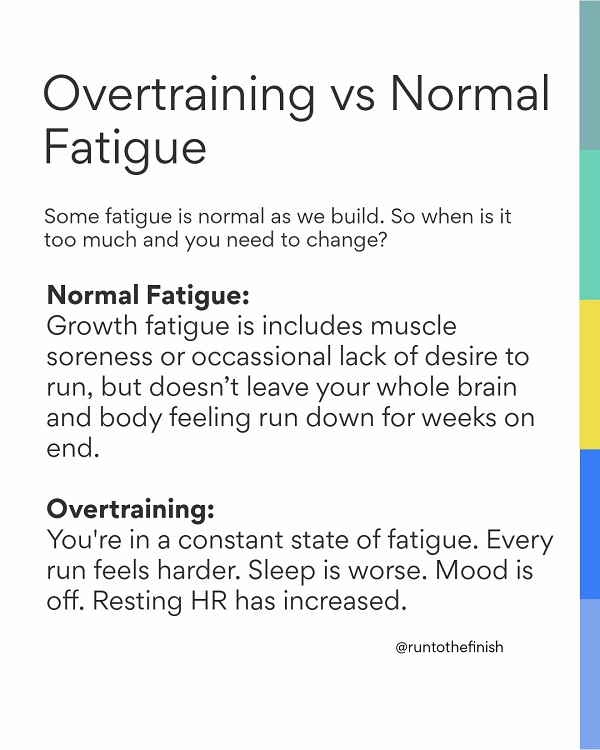
Signs of overtraining include more than just heavy legs; you may start to notice decreased performance, overall fatigue and tiredness, mental exhaustion, headaches, irritability, and a higher rate of injuries.
If you’re experiencing these symptoms, it’s a good idea to see a doctor first to rule out any other underlying medical conditions.
Coach’s Tip
Running on tired legs occasionally is normal, especially during peak training.
But if that heavy leg feeling sticks around, it’s time to back off.
Your body gets stronger from rest, not just from the constant miles. Less really can be more.
Check out all the signs of Overtraining to see if they sound familiar.
2. Wearing the Wrong Shoes
It may come as a surprise, but the wrong shoes can also make your legs feel heavy. You want running shoes that are light, but still provide the support you need.
Stability shoes for overpronation, for example, tend to be heavier since they’re thicker and provide more support.
If they’re the right level of support for you, you’ll feel fine, but if they’re too heavy it can lead to the sensation of having heavy legs when running.
On the other hand, having a shoe that is too light and not supportive enough might also cause issues.
If you don’t have enough support in your shoe, your body may be under extra stress as your foot meets the ground. This can make the muscles get tired faster.
This can also happen with worn-out or old shoes.
How to choose the right right running shoe >>

👉Coach’s Tip
Running with heavy legs could be due to the midsole foam in your favorite running shoes wearing out. That’s why you’re supposed to change your running shoes every 500 miles or even less from some brands.
Watch for uneven wear on the soles of your running shoes. It could be an indication that you require new shoes with better foot support. If that’s the case, try changing your shoes and see if that helps alleviate the feeling of heavy legs.
Additional tips to know when to replace your running shoes >>
3. Poor Running Form
Running with bad form frequently puts extra strain on your body and might result in tired, heavy legs.
Poor running form causes your body to use energy inefficiently, which not only slows you down but also causes you to tire out more quickly, increasing the likelihood that your legs will feel heavy.
And so, maintaining a good running form when running can prevent you from fatiguing too quickly and minimize the risk of experiencing heavy legs when running.

👉Coach’s Tip
Your running form includes everything from your posture to your cadence to your foot strike.
Over time, a bad running form can result in many problems and conditions, including the feeling of heavy legs when running.
- Work on your range of motion with hip mobility
- Continue focusing on a good stride that lands under your body
- Include hips, glutes and core workouts weekly – this is going to ensure you can maintain good form
Improvements in these areas will naturally result in better running form and will have a greater impact on avoiding heavy legs while running.
4. Not Fueling Enough
A lack of carbohydrates (and total calories) can also make you feel like your legs are heavy while running.
When you run, your body constantly uses a combination of carbohydrates and fat to provide the energy your muscles require. These carbs are stored in your muscles as glycogen.
If you drastically reduce your carb intake at meals, your body will be unable to store as much glycogen in your muscles. This makes it harder for your body to make energy while you run, which can make you feel like you have ‘dead legs.’
Figure out how many calories runners need to ensure you aren’t underfueling and hindering your progress.
👉Coach’s Tip
If you’re getting the heavy legs feeling midway through your run, chances are that you’re not fueling properly both before and during your workouts.
Make sure to carry energy gels and chews on long runs where you might deplete your glycogen stores.
Learning how to fuel up can make the difference between having heavy legs or not having heavy legs when running.
5. Iron Deficiency
Iron is a component of hemoglobin, which carries oxygen to your muscles.
When your body doesn’t get enough iron, it can have trouble transporting the right amount of oxygen to your muscles during a run.
When this happens, you will most likely feel fatigued and exhausted, but some people may also have a heavy leg sensation.
Most athletes get enough iron in their diet by following a well-balanced diet. However, female runners and vegans may find it more difficult to achieve their iron requirements.

👉Coach’s Tip
Iron deficiency is more common than you might think among runners. Low iron levels can make your legs feel heavy when running.
Runners lose iron through foot strike as red blood cells are damaged when their feet strike the ground, lowering their hemoglobin levels.
If you feel you’re deficient in iron, rather than just taking iron supplements, it is best to consult with your doctor.
If your doctor discovers that you have iron deficiency anemia with a simple blood test, he or she will recommend a treatment plan.
This might be as simple as including more iron-rich foods into your diet or taking a daily iron supplement until your levels return to normal. Absolutely DO NOT supplement without blood testing.
Most people’s bodies will adjust to iron overload by absorbing less iron from their food. Plus, high iron levels can cause long-term health problems in a few cases.
6. Dehydration
Dehydration can lead to muscle cramping, but it can also cause fatigue during a run.
Staying hydrated is incredibly important during runs. If you sweat out a lot of water and don’t drink enough to make up for it, your blood can get thicker. To pump this blood, your body has to work harder.
The run may seem harder or your legs may feel more tired out than usual.
👉Coach’s Tip
Runners must consider more than just fluids. Water and electrolytes are depleted during exercise. If you’re training hard or in hot weather, using hydration mixes during recovery, as well as before and during your runs, can be beneficial.
Make an effort to pay attention to the cues that your body gives you and drink when you feel thirsty.
Not sure how much hydration you’ll need while training and even racing? Check out our guide for how to incorporate electrolytes while training.
7. Lack of Sleep
You might be able to power through the day on just a few hours of sleep, but your body definitely notices. Sorry, but an energy drink or cup of coffee isn’t going to help here.
Lack of sleep builds up over time and can start to sneak into your training, and yes, even your race day performance.
When you’re running on too little rest, everything feels hard. Your legs feel heavier, your motivation dips, and your pace might feel tougher than usual.
👉Coach’s Tip
Start keeping a consistent sleep routine, especially if you have a big goal set for yourself.
Adults typically require 7 to 8 hours of sleep per night, while teenagers may need up to 10 hours.
Getting enough sleep is frequently neglected, but it can contribute to the sensation of having heavy legs when running.
8. Insufficient Recovery
Runners who consistently skip cooldowns, avoid easy runs, and rarely schedule rest days/off-seasons are more susceptible to heavy legs when running.
Constantly overloading your body with hard training days with no rest is the easiest way to have heavy legs and ultimately get injured.

👉Coach’s Tip
Apart from sleep, make sure you’re getting the right number of rest days when training and give your body the time it needs to recover after hard days.
Stop racing multiple races back to back, skipping your rest days, and avoiding down weeks and even recovery periods.
Pay extra attention to recovery in the form of massages, foam rolling, etc.
When Is It Time to Go to a Doctor
If you’ve ruled out the more obvious causes of heavy legs while running, it’s time to consult your doctor about iron levels and blood circulation.
Heavy legs while running could be a symptom of more serious underlying health issues. If you’ve tried everything on this list and still haven’t found a solution, it’s time to seek medical help.
What to read next?
- Adductors vs. Abductors | The Hip Muscles You’re Probably Neglecting
- Is Sugar Bad for Runners? What You Need to Know from a Registered Dietician
- Core Strength for Runners: The Foundation Every Fast Runner Builds On
Other ways to connect with Amanda
Instagram Daily Fun: RunToTheFinish
Facebook Community Chatter: RunToTheFinish
Sign Up to Receive a Weekly Newsletter with Top Running Tips and Laughs



 21 Best Fitness Books of 2025 That You Won’t Regret Reading
Loved this post, had me giggling the whole time.
While we all know dead legs are a thing- we should all know that how we take care of the legs (and whole body!) outside of running is an even bigger thing!