

It’s not about cranking out 100 crunches or setting a plank world record. Having a strong core is actually going to help improve your running and the bonus is, it can make you feel stronger in plenty of other parts of your day, too. 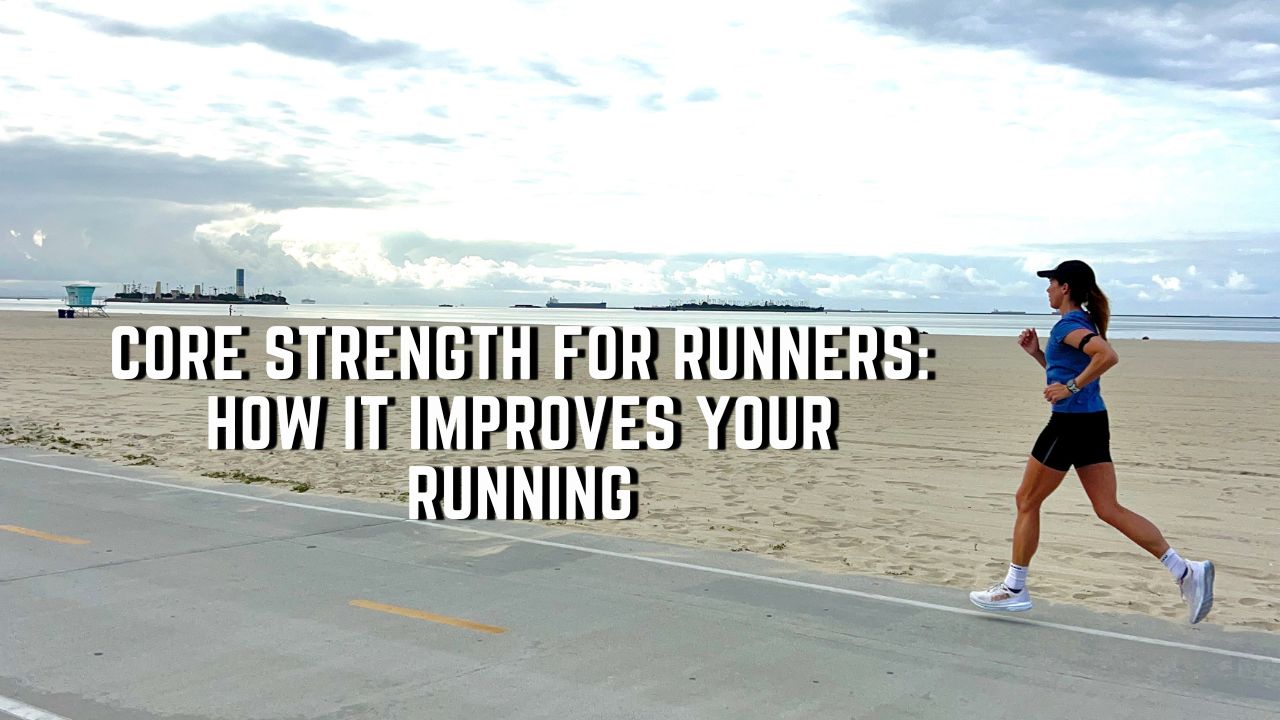 Depending on how long or far you’re running, at some point or another, you’ve probably noticed that the first thing to fall apart when fatigue hits is your form. Your posture starts to slump, your stride gets sloppy, and suddenly every step feels harder than it should.
A strong core keeps you running tall and balanced, which means you’re way more likely to stay on your feet when dodging potholes, hopping curbs, or navigating rocky trails. Leg strength can only do so much if your core is weak.
Front of the pack runners, elite runners, fast runners, they all focus on core work. Which as we said doesn’t meant crunches, it means strength work that will improve everything about your endurance, efficiency and form.
Why Do Runners Need a Strong Core?
When you think of a strong core, many times the first thing that pops into your mind is six-pack abs. But core strength is SO more than just that and so much more important.
Having a strong core serves two main purposes for runners: improving performance and reducing injuries.
To understand this further, we need to look at what function our core muscles serve.
- maintaining good tall posture
- keeping our knees aligned
- keeping our hips from dropping too far with each step
- stabilizing our pelvis
- reducing unnecessary movement
Let’s paint the picture of why all this actually matters for your running.
You head out for your long run feeling strong, running tall, shoulders relaxed, and every stride smooth and easy. Mile after mile, you’re cruising along.
But as the run goes on, things start to shift. Your shoulders creep towards your ears, there’s a dull ache in your hips and glutes, and suddenly lifting your feet feels like way more effort than it should.
Sound familiar?
When your form starts to crumble and fatigue sets in, your body is working overtime to keep you upright and moving. Endurance isn’t just about your legs, but your core strength.
That extra strain doesn’t just make running feel harder; it also increases your risk of common running injuries including:
- runner’s knee (patellofemoral syndrome)
- IT band syndrome
- plantar fasciitis
- shin splints
- even stress fractures
And it’s not just something us coaches like to preach, science backs it up too. This research study showed that doing three short core workouts a week for 8 weeks helped runners to stay balanced, build a stronger core, and run more efficiently. They were able to keep good form longer and use less energy while running, which made those later miles feel a little easier.
We’ll let you in on a little secret: building a strong core doesn’t mean holding a plank for as long as you can or super complicated workouts like what you see on social media.
A few simple exercises a couple of times a week can go a long way in helping you stay strong, reduce injury risk, AND maybe even make every mile feel a little easier.
That’s exactly why the 30-Day Core Challenge was created. 30 days of simple, 10-minute exercises designed to strengthen your core and help build the consistency that makes all the difference on the run.
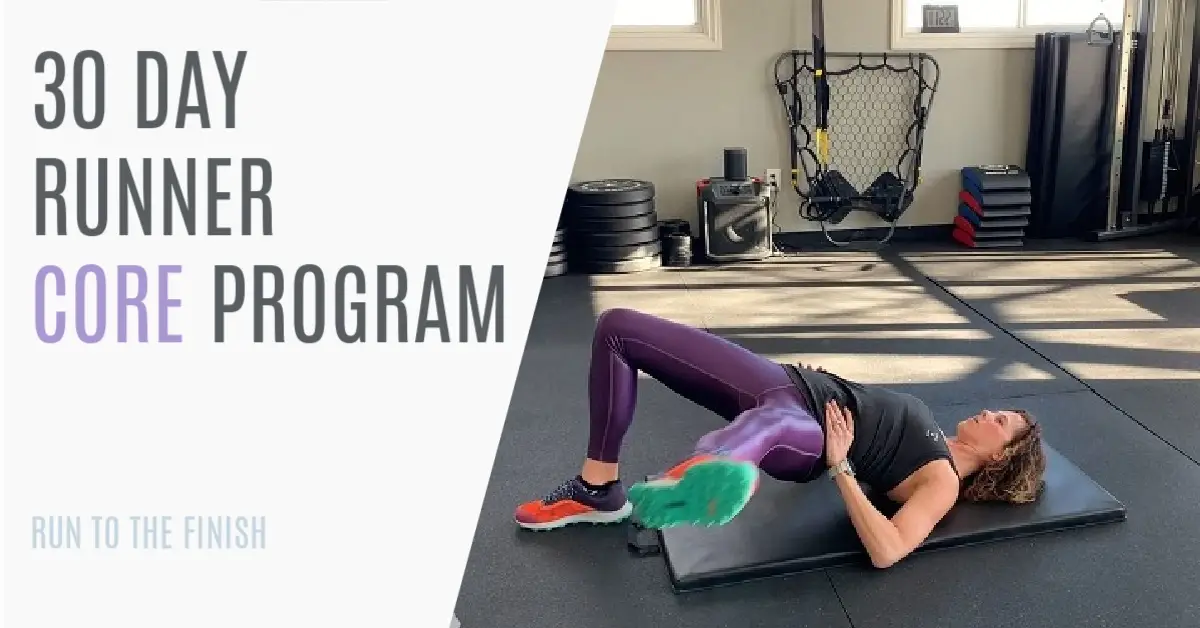
This program is built for all levels with follow-along videos. The workouts will focus on abs, hips, and glutes to help prevent common running injuries and improve your speed. You’ll have access to the program for life and can sprinkle it into your schedule whenever you want!
What Muscles Make Up Your Core?
As I mentioned above, when we think of our core we often envision six-pack abs, but core and abs are not the same thing. Our core includes our abs but it is much more than that.
Your core muscles refer to different groups of muscles that are located within your abdomen or the ‘trunk’ of your body. There are 35 different muscles in your core and can be broken down into 8 major groups:
1. Rectus Abdominis
These are the muscles that make up your six-pack abs. You can work these through crunches, sit-ups, and really most any traditional ab moves. They help to contract the body to curl the upper body down or lower body up and help to raise your legs.
2. Transverse Abdominis
These muscles lie at the back of your rectus abdominis and around the body to the lower spine and are a major stabilizer when you run.
You can work this through planks, Pilates, stability ball moves, etc. They help to improve breathing for your runs too!

3. Obliques
This includes both your internal obliques as well as your external obliques and provides stability to your sides and the front core. The external ones are ab muscles that run along your sides, and the internal ones help twist your body from side to side.
They help to keep your shoulders square and help you breathe better while running. A sign of oblique weakness is that people stop breathing when performing simple movement patterns to maintain stability.
You can work these with bicycle crunches, side planks, and the moves below!
4. Erector Spinae
These are a group of muscles that are located around your spine all the way from the cervical to lumbar areas, in other words from your neck down to your lower back area. They make up your lower back muscles, allow you to have a stable spine, and support your core when it’s engaged.
You can work these through lying on your stomach and doing supermans, deadlifts, etc. Having a weak lower back won’t support those strong abdominal muscles, so they all go hand in hand.
5. Multifidus
They are a group of muscles that wraps around either side of your spine from your pelvis to your neck. It contributes to the stability and support of the entire vertebral column, particularly in the lumbar region, and is most associated with lower back pain.
6. Diaphragm
Your diaphragm is part of the core muscle group that’s right beneath the ribs and helps you properly breathe in and out during a run.
7. Pelvic Floor
These are the muscles located between the tailbone and the public bone between the pelvis. They are often ignored and can be even more important for those of us running postpartum.
8. Glutes
Last but not least we have our glute muscles, which we all know aren’t just one muscle but three different ones. They help stabilize our core and even absorb some of the force when running to reduce the risk of knee injuries.
You can work these through squats, lunges, running, etc. They help to provide power to your stride, keep your gait aligned, and ensure your hip flexors aren’t overworked.
Will Running Improve Core Strength?
Running can help to improve the strength of our core muscles, but the truth is we need to be doing external work to truly get the benefits we’re looking for.
When running faster, you should notice an automatic tightening of your core. This also happens because you are slightly leaning forward, and therefore, it’s maintaining your balance. Some runners have said this alone gave them a six pack, but for most of us that won’t be the case.
If you’re looking for some simple movements to add to your routine, check out these 10 must do core exercises for runners.
Is It Better to Do Core Exercises Before or After Running?
Doing core work before or after running is often a personal choice.
But here’s a breakdown of reasons why doing it around your workout is key and how it affects you before vs after your run:
- Prior to your workout it activates muscles,
- Muscle activation means they are ready to work and provide more power
- Prior to a workout means it’s part of your dynamic warm-up and you’re less likely to skip it
- Too much prior to a workout can over-fatigue the muscles, in which case why not do half before and half after
- Post-workout has fewer benefits on that run but will benefit you overall
We hope this explains why having a strong core doesn’t mean having washboard abs. It means being able to run longer and farther without getting fatigued so quickly.
Try adding a few exercises into your routine or join the 30-day Core Challenge and let us know how it goes!



 Brooks Hyperion Elite 5 Review | Carbon Plated Flexibility from 10K to Marathon
Leave a Reply