

Have you ever wondered if there’s a difference in the fit of men’s vs women’s running shoes? The answering is a resounding yes when the brand does it right! As gear testers this is a point we take into consideration.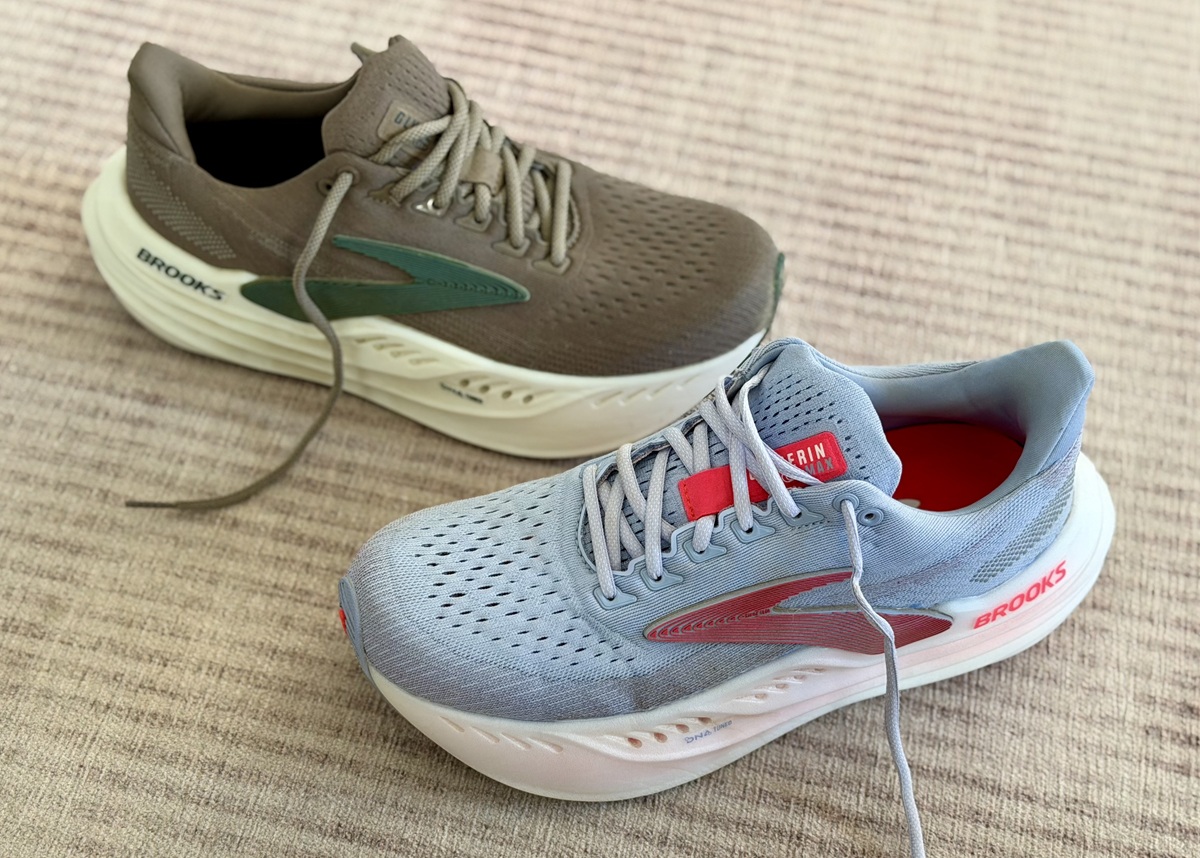 Can you wear shoes from the opposite gender? Absolutely. But there are a few important things you should know. We’ll make the design terms make sense and help you decide what’s the best option.
I’m lucky that my husband and I wear similar shoe sizes, so every now and then we end up “sharing” shoes, and yes, that mostly means I steal his. There’s no rule that says you have to wear men’s or women’s shoes; if the size works, you can absolutely wear them.
That said, the fit may not feel quite right, and over time, it could throw off your gait if the shoe isn’t designed for your foot shape.
Running shoes (or any shoe, really) aren’t just about the size; they’re designed with a few key features that account for the anatomical differences between male and female feet.
Let’s dive into what makes Men’s vs. Women’s Shoes different.
Men’s Vs Women’s Shoes: What’s the Difference?
If you put men’s and women’s shoes side by side, the size difference is obvious. But what happens when you break each shoe down into all its pieces?
Key differences:
- Shoe Last (design mold)
- Heel Cup
- Cushioning and Support
- Fit and Anatomical Differences
- Colors and Patterns
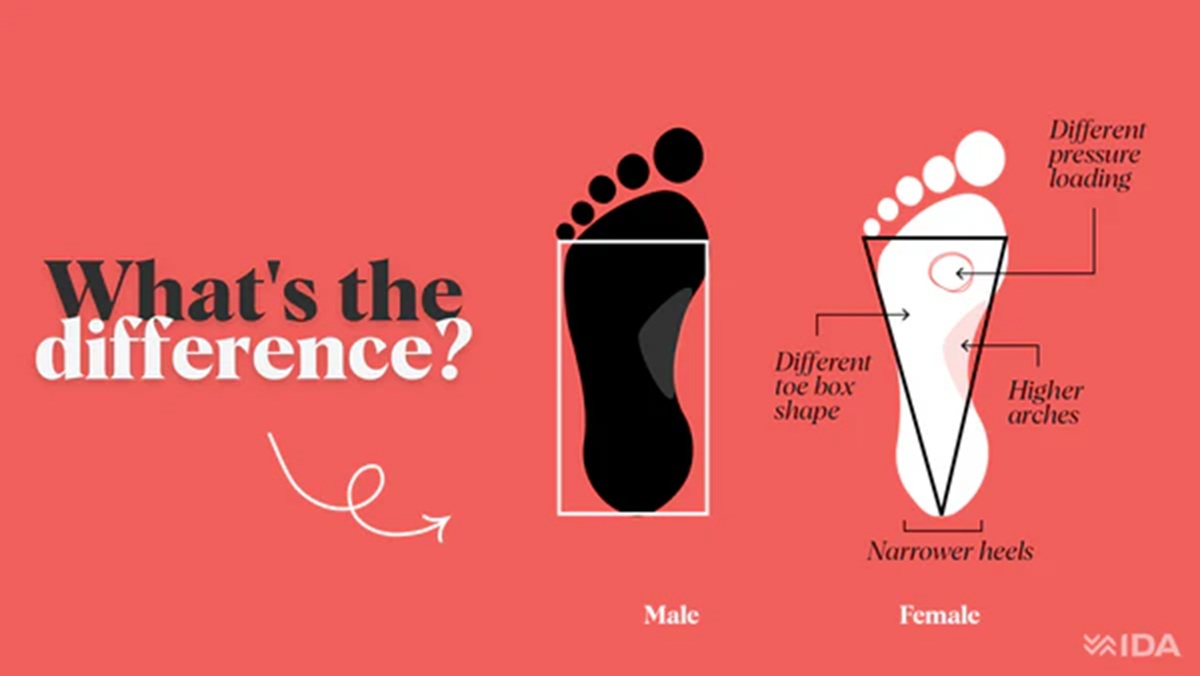
Quick take: Women’s shoes tend to have a narrower heel, a narrower midfoot, a bit more room in the toebox, and slightly softer cushioning. It’s often described as our feet being more triangular.
They’re also designed with biomechanics in mind, like a larger Q Angle (the angle from hip to knee), which means many women’s shoes include added arch support, midfoot stability, or more flexibility up front to keep your stride feeling smooth and comfortable.
Shoe Last for Women
The last is the very first step in the shoe design process.
It’s a shoe-shaped mold that the entire shoe is built around. And no, despite what you might be thinking, it isn’t meant to perfectly match your foot. Everyone’s feet have different curves, bumps, and shapes, so the last provides a consistent foundation that works across a wide range of runners.
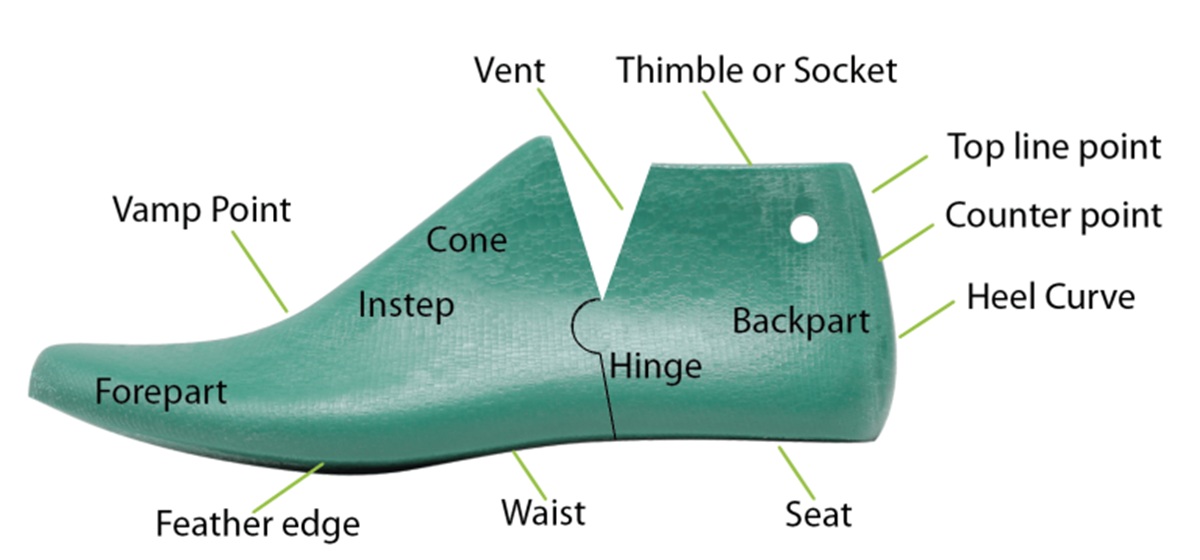
It’s also far from a one-size-fits-all situation. There are hundreds, if not thousands, of different lasts, which is why two shoes labelled neutral or stability can feel completely different on your foot, even when theyre’ designed for the same type of runner.
Heel Cup (aka heel counter)
You can see in the earlier image that women’s heels are generally narrower, which means it’s more likely for a woman’s heel to slip out of the back of a shoe if the shoe isn’t designed with that in mind. Could be why we’re talking about needing to do heel lock lacing so often!
Try squeezing the back of a shoe. Do you feel some resistance? That’s because of the heel cup (aka the heel counter).
The heel counter is the U-shaped structure at the back of the shoe designed to wrap securely around your heel and keep it stable.
There are a few different types, but the two most common are internal heel counters (like what you’d find in a pair of Nike Vomero 18 ) or external heel counters (like what you’d find in a pair of On Cloudflyer 5).
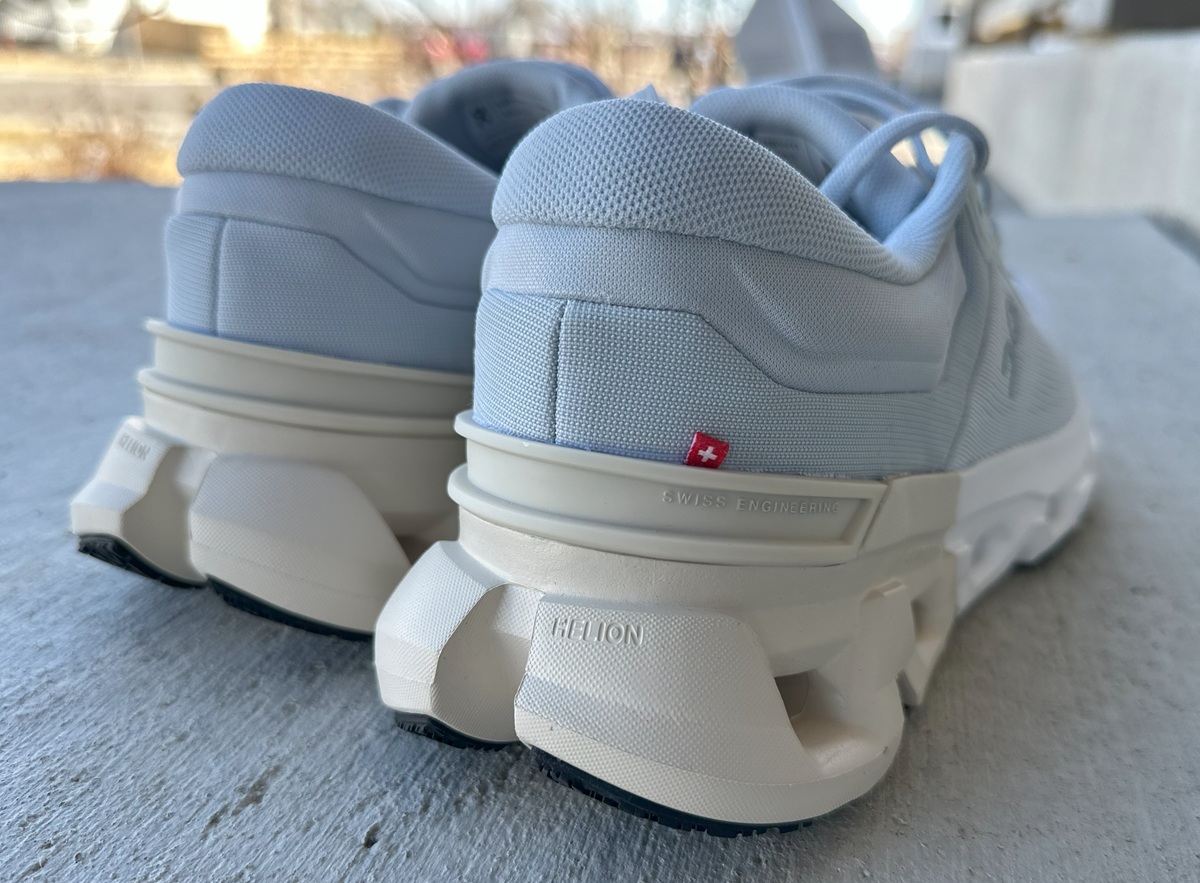
Some brands have even started removing heel counters entirely, as seen in shoes like the ASICS Metaspeed Sky, to save weight and create a snappier, faster feel. That tradeoff? A little less structure around the heel and yes, they’re harder to slip off without untying.
Women’s shoes typically use a narrower, more tapered heel cup, while men’s shoes have a wider, more rounded heel.
So if you’re swapping between men’s and women’s shoes, the heel fit may be off, either too loose and prone to blisters, or too tight and uncomfortable.
Neither is ideal, which is why it’s always best to try shoes on before taking them out for a few miles and coming home with achy feet.
Cushioning and Support
Women’s running shoes usually have slightly softer cushioning and feel a bit lighter, which helps each step feel smoother and more comfortable. Brands also tend to use more contoured, flexible foam designed to better support narrower heels and higher arches, so the shoe moves more naturally with the foot.
You might notice that there is a slight difference in cushion stack height on men’s and women’s shoes of the same model, this is part of what’s happening .
Men’s versions, on the other hand, use firmer, more responsive foam, which adds a little extra weight but helps the shoe stay stable and durable over more miles.
This is why the same shoe can feel different depending on whether you try the men’s or the women’s version; it’s not just about size, but how the cushioning and support are tuned.
Research has also found that while a good, cushioned daily trainer helps balance things out, women tend to be more sensitive to changes in stiffness, cushioning, and fit, which makes choosing the right version even more important for comfort and injury prevention.
Fit and Anatomical Design
Wearing shoes that fit will is one of the easiest ways to avoid injuries, and this is where men’s vs women’s running shoes can start to matter.
Men’s feet are usually flatter and wider, which is why their shoes tend to have a roomier toe box and midfoot. That extra space helps keep things comfortable and supported.
Women’s feet are often shaped more like a triangle, with higher arches and a narrower midfoot and heel. That’s why a good heel counter is so important, it helps keep your foot locked in so it’s not sliding around.
Too much extra space in your shoes can quickly turn into blisters, rubbing, and an uncomfortable run.
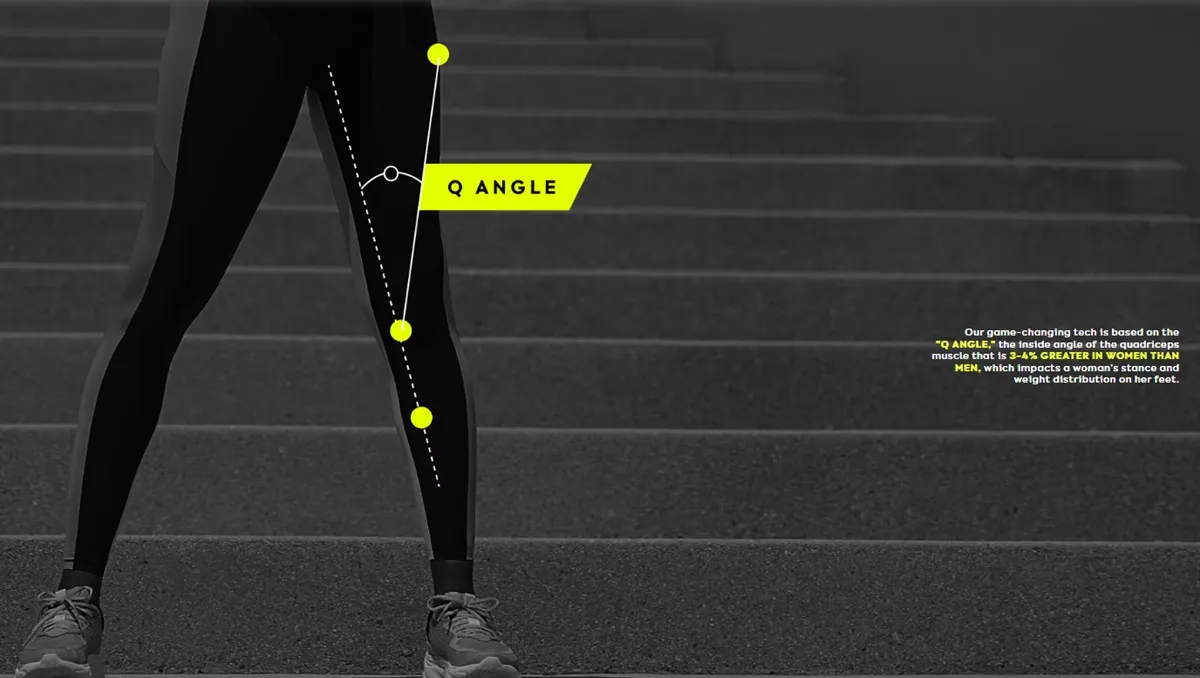
Another thing we’re seeing from more women’s-only brands is shoes designed with the Q-angle in mind. This is the angle formed between your hip, knee, and shin, and since women tend to have wider hips, that angle is usually a bit larger.
Ryka’s “game-changing tech is based on the ‘Q Angle’, the inside angle of the quadriceps muscle that is 3-4% greater in women than men, which impacts a woman’s stance and weight distribution on her feet.”
When a shoe is designed with this in mind, it can help take some of the stress off your lower body each time your foot lands.
What About Unisex Shoes?
Our team has tested quite a few shoes that come in unisex sizing, and some of them even show up on our list of the best non-plated race day shoes.
Because unisex shoes are meant to work for a wide range of runners, their fit and design tend to be more neutral, but most are still built on a men’s last. If you have a narrower foot or higher arches, these may not work best for you.
We’ve also found that sizing can get a little tricky from brand to brand, so if you’re considering a unisex shoe, it’s often worth trying them on in person to make sure you get the best fit.
Phew, that was a lot of info, but we hope you learned something new! Before you click ‘buy’ on your next pair of running shoes, keep in mind how men’s and women’s shoes are designed differently and how that can impact fit and comfort.
What to read next?
- Best Women’s Running Shoes According to Running Coaches (Real Miles, Real Reviews)
- 7 Best Men’s Walking Shoes: Tested by Guys Who Walk 10,000+ Steps Daily
- Title Nine Gear Review | Women’s Running Apparel By Women



 Diadora Cellula 2 Review | A Run-Walkers Dream Shoe
Leave a Reply