

There are a lot of massage guns on the market, but two names you’ll hear most often are Hypervolt and Theragun. Both have been around for a while and have built a solid following among runners. But is one better than the other?
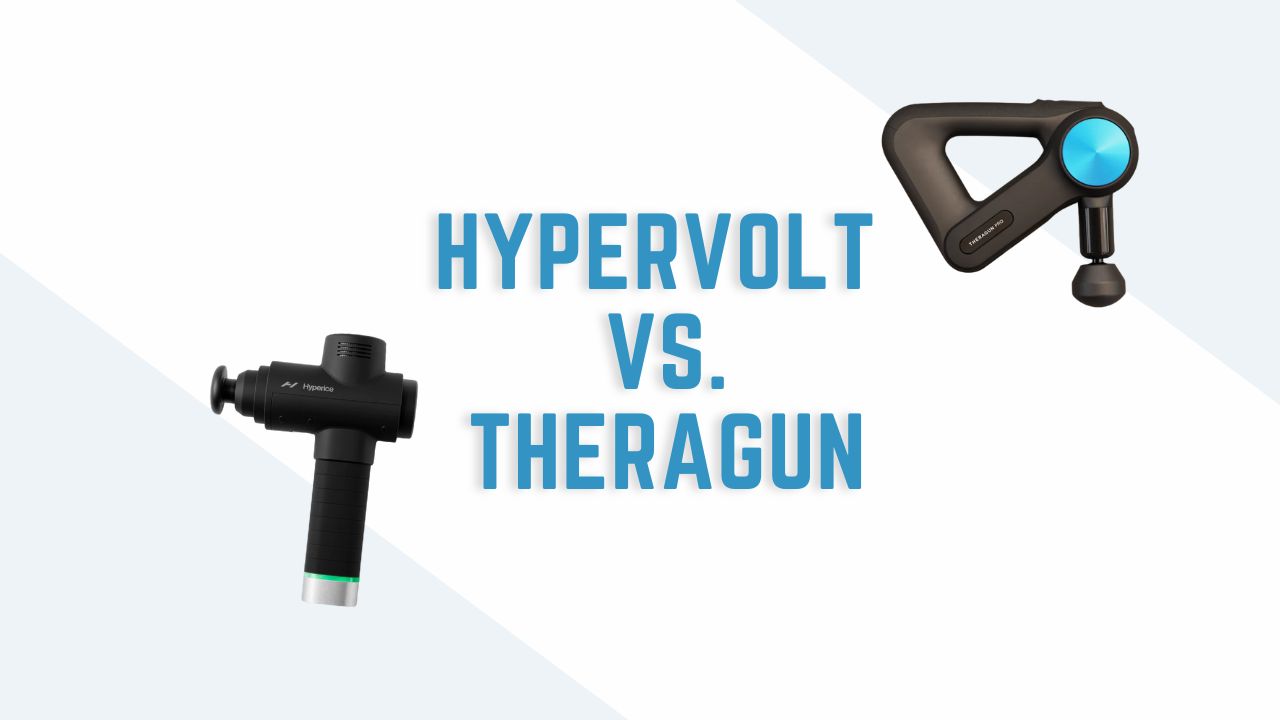
Therebody now offers a full line of 9 (!!) different types of massage guns, which can honestly feel super overwhelming. Hyperice has taken a simpler route, focusing on refining the Hypervolt rather than expanding into a long list of options.
To see how these brands stack up, we’re going to compare the Hypervolt 2 Pro and Theragun Pro 5th Gen.
Hypervolt vs. Theragun
Let’s look at the specs of these massage guns before we compare some features.
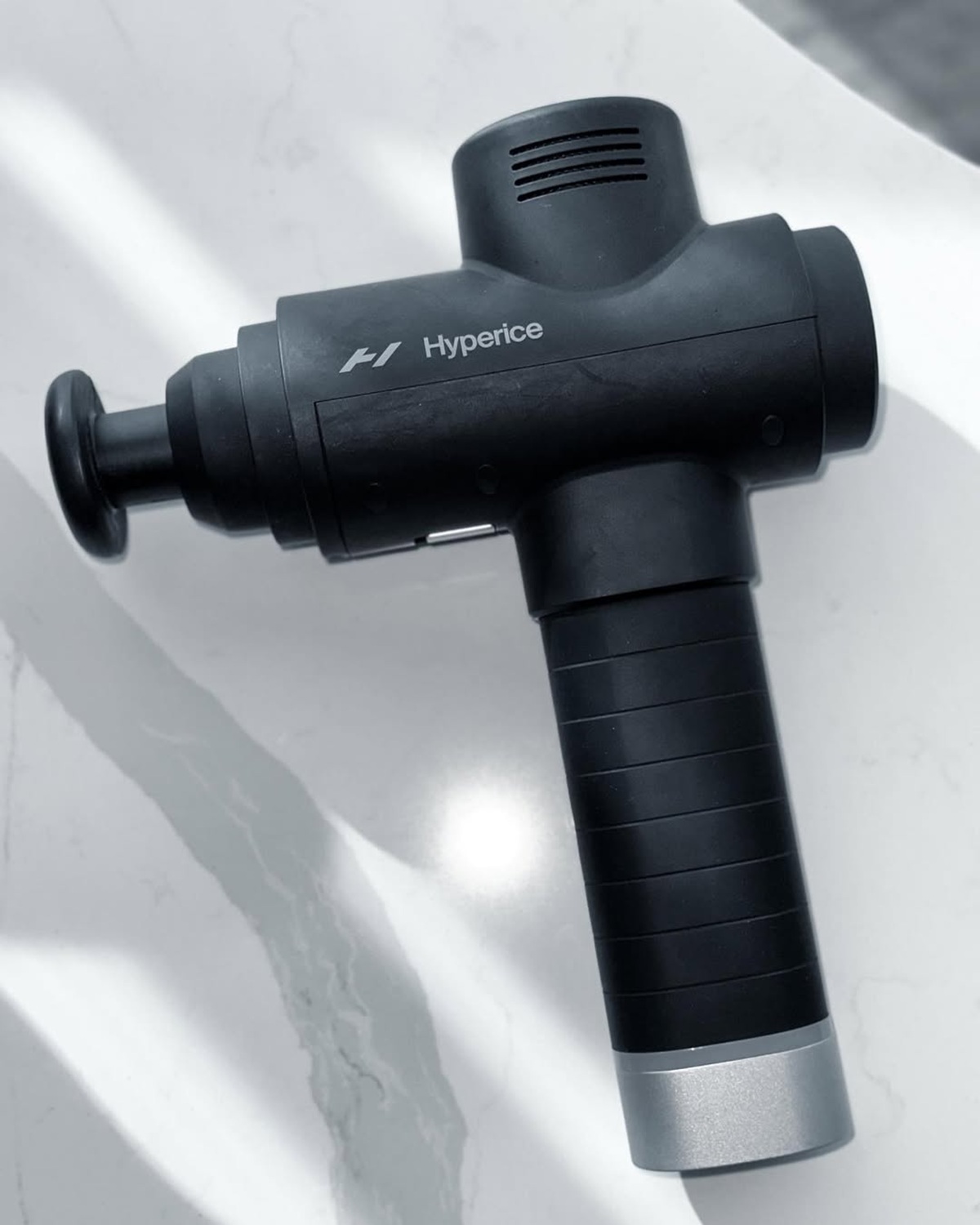
Hypervolt 2 Pro
This massage gun from Hyperice combines the power of a 2700 apm, high-torque motor with 5 speed settings. Basically, that’s a fancy way of saying this thing can get pretty powerful.
There’s no timed setting, just pick your speed on the digital dial and work on whatever muscle needs some extra attention. Want a little extra guidance? Sync the massage gun with the Hyperice app to follow a guided session.
Details
- Compression Level: n/a
- Heat Level: n/a
- Speed: 5 levels of percussion
- Battery: 3 hours
- Device: massage gun, power supply, 5 head attachments, pouch
- Check it out from Hyperice.com for $349 (FSA/HSA eligible)
Quick Take
- Multiple head attachments to treat different muscle groups
- Different versions to meet different price points
- Perfect for travelling
- No carrying case included
- Battery pack durability is questionable by some folks
Theragun Pro 5th Gen
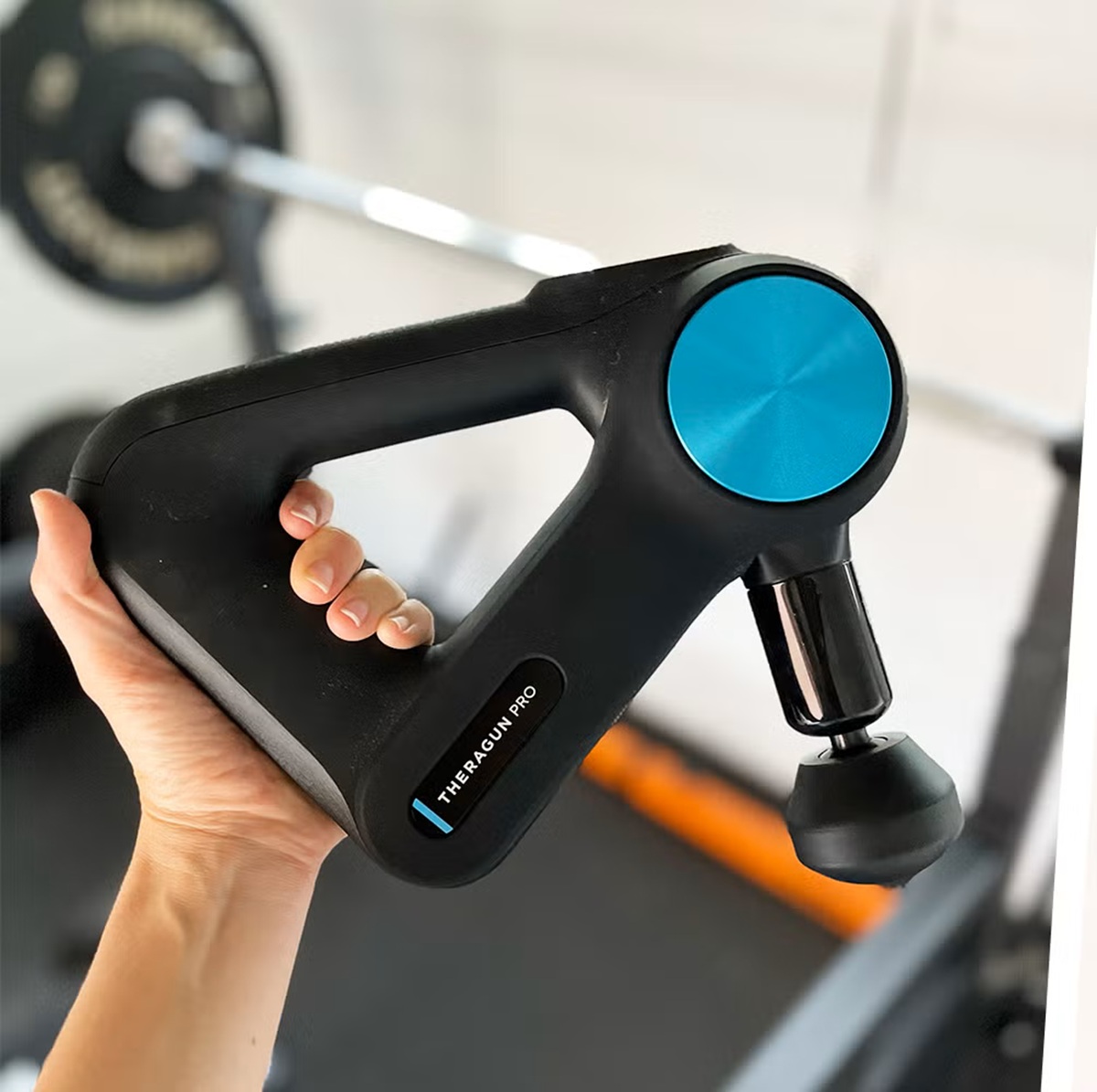
This massage gun from Therabody uses 2400amp which is not as powerful as the Hypervolt, but it’s still going to get the job done in loosening up those tight muscles.
What’s a little bit of an upgrade here is the OLED screen, so that you can see how much time, what setting, and the level of speed that you’re using. Set this up right on the massage gun or use the Therabody app for detailed guidance on how and where to position the massage gun.
Details
- Compression Level: n/a
- Heat Level: n/a
- Speed: 4 visually guided routines
- Battery: 120 minutes
- Device: massage gun, rechargeable power supply, 6 head attachments, pouch and carrying case
- Check it out from Amazon.com for $530 (FSA/HSA eligible)
Quick Take
- Multiple head attachments to treat different muscle groups
- The app is great, especially for saving personal massage settings
- The digital screen makes it easier to know what settings you’re using
- Folks have reported that the battery life doesn’t last as long as it should
- The carrying case doesn’t fit everything, and you need a separate accessory bag
- 5th gen can’t use the battery from previous models
Hypervolt vs. Theragun Feature Comparisons
Obviously, one of the biggest differences between the two is the price. So let’s put that aside and see how they compare across the different features.
Battery Life and Charging – Hypervolt
On a full charge, the Hypervolt can last up to 3 hours, while the Theragun tops out around 120 minutes, which may only get you through one of its longer pre-programmed sessions.
Both massage guns offer extra battery packs, so you can keep one charged and ready instead of waiting for the device to power back up.
One things to keep in mind is that several reviews have mentioned that older Theragun batteries aren’t compatible with the 5th Gen model, so if you’re upgrading, you won’t be able to resuse your previous battery packs.
App – Tie
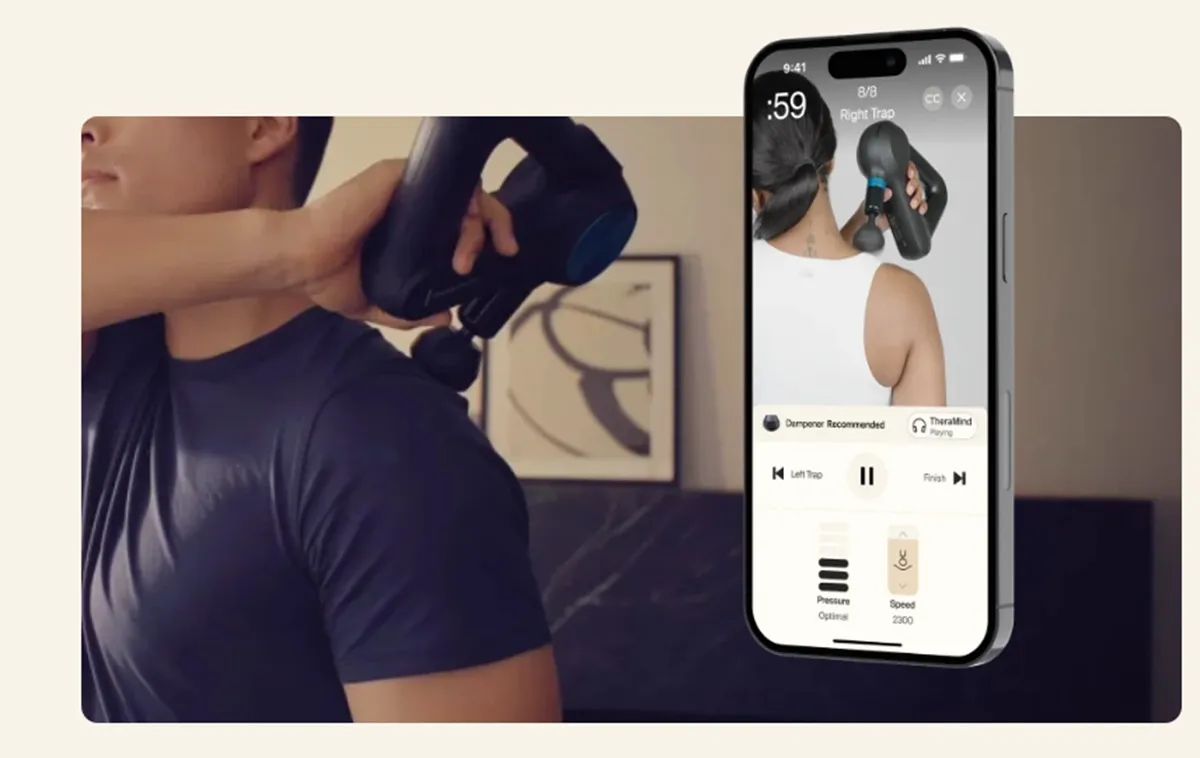
Both Hyperice and Therabody have created mobile apps that can be used alongside their recovery tools.
When you open the app, you’ll see a video of where and how to use the massage gun. You’ll also be able to control things like the intensity (or speed) and the amount of time per muscle/area of the body.
You can pick from pre-designed sessions or even create customized ones that you can save to use again later.
At the end of the day, both apps are great, and you’ll get the guidance that you need to use your massage gun correctly.
Performance – Tie
Both massage guns will do a great job with helping those tight muscles, and when it comes to performance, it really is going to be up to personal preference.
The Hypervolt tends to feel smoother and a bit faster, which makes it a solid choice for everyday recovery. The Theragun, on the other hand, feels more aggressive and can dig deeper into the muscle, great for working through stubborn knots.
No matter which one you go with, you’re going to get the relief you’re after, which is why this one ends in a tie for us.
Design – Theragun
The Hypervolt is a traditional massage gun design, one handle, one way to hold it.
Theragun, on the other hand, features a triangular grip so you can hold it in different ways. That shape really comes in handy when you’re trying to reach those tough spots like your back or shoulders without twisting or straining your arm.
Attachments- Tie
The Hypervolt comes with 5 attachments, while the Theragun comes with 6. The names and shapes will vary from brand to brand, but they all do the same thing!
Each attachment targets the muscles a little differently, giving you more variety than just using a foam roller or a lacrosse ball. It works well for warming up before a workout or loosening up tight muscles afterward.
Cushion
Use this if you’re new to massage guns since it’s the softest. It’ll help ease you into massaging those sore muscles.
Round
This is a step up from the cushion attachment and works great for larger muscle groups.
Medium Ball
This may be made of something a little firmer than the foam ball, depending on the model, but it is also suitable for use on most of the body and may simply provide a little more intense muscle work than the larger head.
Flat Head
This one might be more ideal for most of our larger sore muscles because it spreads out the impact. Use this on a larger area on a denser muscle group like hamstrings or glutes.
Bullet
Use this for smaller/harder-to-reach muscle groups for a deeper, more targeted massage.
Fork Head
Designed with two points of contact for areas that are more sensitive like the ankle/calves, forearms, and upper traps.
When To Use a Massage Gun?
You can get the benefits of using the massage gun for recovery late in the day or for priming muscles prior to a workout.
👉Muscle Activation: 30 Seconds
Pre-workout, you could utilize it on areas like your glutes and quads to hep wake up the muscles with a short session.
A few studies have shown that using it on the forearms improved grip strength when done before lifting. Another showed more power in the quads.
So it’s certainly worth testing in your dynamic warm up. I like it to hit on my tight TFL prior to a workout.
👉Muscle Re-Activation: 15 Seconds
Some have also recommended using it during a workout when you’re beginning to fatigue, possibly because the vibration creates the muscle distraction to lessen pain signals. This is more common in strength training sessions where people are also looking for those gains noted above.
👉Relaxation: 2 Minutes
Once you’ve fully cooled down from a workout or are getting ready for bed, you can use the massage gun on different areas for up to 2 minutes. Again moving the gun around consistently, it’s said to promote relaxation and will now be working in to those tight areas to release fascia.
We hope this info on Hypervolt vs. Theragun was helpful. If you use one or decide to purchase one, let us know which massage gun you have and how you like it!
What to read next?
- Hyperice Product Comparison: Which Recovery Tools Deliver? We Tested them All
- What’s the Difference Between Active Recovery and Rest Days?
- Are Massage Guns Worth It? | Affordable Options for Runners



 Ball of Foot Pain When Running: Causes & How to Fix It


Leave a Reply