

80/20 is one of the most popular training concepts out there and often the first thing you’ll see when you start researching running plans. But does it work for everyone? Our answer below may surprise you. On a recent episode of the Tread Lightly Running Podcast, we chatted with Jonah Rosner of Rosner Performance. As a sports scientist, Jonah has spent time working in a lab focused on endurance physiology, giving him a deep understanding of how the body adapts to training.
Throughout his career, he’s worked with a variety of sports teams before narrowing his focus to running. His goal is to apply the latest science and technology in a practical way to help runners optimize distance running performance.
We’ve broken down some of our conversation below, but make sure to check out the full episode for the complete deep dive into why 80/20 training doesn’t work for everyone.
What does 80/20 mean?
You may be familiar with the 80/20 training concept, especially if you’ve read Matt Fitzgeral’s book, 80/20 Running. But let’s take a look at what it means if you’re new to this training style.
The 80/20 concept comes from observational research on elite endurance athletes. Researchers started to notice a pattern:
- about 80% of their workouts were done at a very low intensity below their first lactate threshold
- about 20% of their workouts were completed at a very high intensity, above the second lactate threshold
At the time, this wasn’t a prescribed way to train. It was simply the way elite athletes balanced their training while increasing their training loads.
Keeping the majority of their training easy allowed them to manage fatigue, avoid burnout, and still include hard quality sessions.
Many coaches, including the RTTF Coaching team utilize this general idea of 80% easy and 20% anything that’s not easy to help balance overall work load for most athletes. BUT there’s some nuance to this.
Does 80/20 Work for Everyone?
The one thing we often lose sight of, especially thanks to social media, is that training is never “one size fits all”. And that’s exactly the case with 80/20.
Your training volume, running history, genetics and personal goals all come into play.
For runners who are already used to a higher weekly mileage, similar to the elite athletes in the original research, 80/20 can be a great way to balance intensity while managing fatigue.

But there are also times when 80/20 isn’t the right training option.
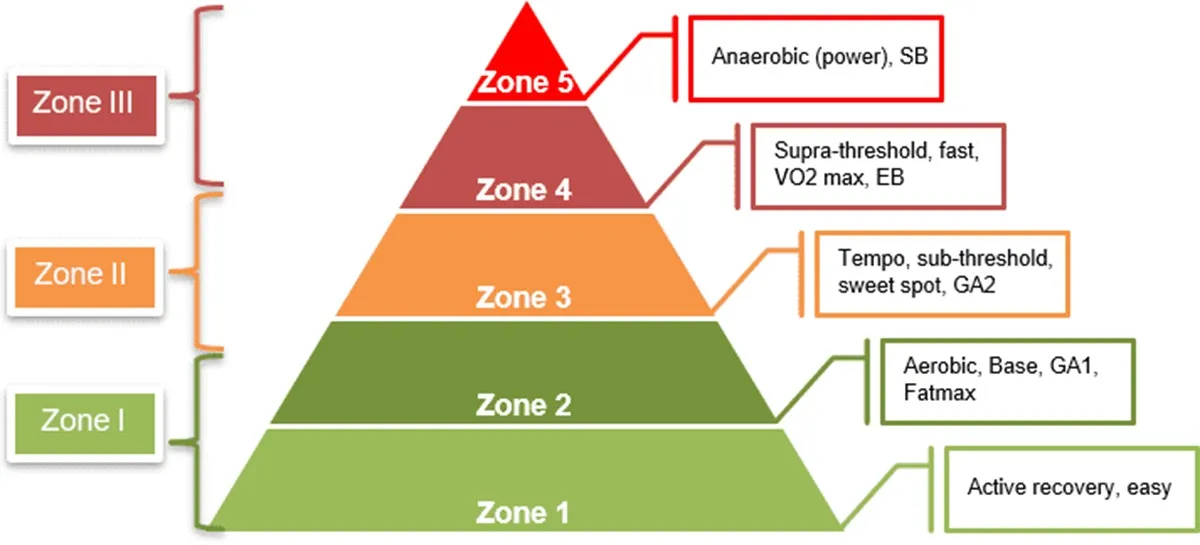
If you’re only running a few hours a week, or running isn’t your main focus, sticking to an 80/20 split likely won’t work. In that case, you might actually find that you can veer into 30-35% of your mileage being anything from Zone 3 to Zone 5 heart rate (i.e. not easy).
This is where the nuance of the discussion becomes really important!!
While in the original data we considered the 20% to be truly hard workouts, for runners chasing a half marathon or marathon PR there needs to be a decent amount of time in that middle ground of Zone 3. Because of this the opportunity exists to do more than 20% of volume at intensity.
Meanwhile if you’re new to running, coming back from an injury, or rebuilding after time away, your focus should be on easy running. Jonah said that 100% easy efforts help to build durability and lower the risk of overuse injuries before layering intensity later on.
Can You Train for a Marathon with 80/20?
TL;DR: 80/20 is a helpful guideline, but not a must-follow rule when it comes to marathon training. A training plan should be adjusted to your goals, weekly mileage, training history, and most importantly, how well your body recovers.
Let’s take a look at the difference between first-time and seasoned marathoners.
👉First-time Marathoners
Marathon training places a lot of stress on the body, especially when you’re increasing mileage for the first time.
The most important goal isn’t hitting a perfect intensity split; it’s getting to the starting line healthy. That often means keeping the majority of your training at an easy effort, building durability, and simply getting more time on your feet.
As your training progresses and your body adapts, you can begin adding Zone 3 work to help prepare for race day.
But consistency and gradual progression matter far more than following an exact 80/20 split. Easy running allows your body to handle the training load and recover so you can keep showing up week after week.
Checkout our beginner marathon training plan >>

👉Seasoned Marathoners
Even with experience under your shoes, 80/20 isn’t a one-size-fits-all rule. Marathon performance depends on more than just easy mileage, so training should reflect the demands of sustaining effort over 26.2 miles.
Easy runs support recovery and volume, while harder efforts at goal marathon effort (zone 3) help prepare you for race day.
Rather than boxing yourself into an 80/20 split, seasoned marathoners benefit more from adjusting intensity based on volume, fatigue, and recovery. In most cases (not just with the marathon), flexibility leads to better results than following strict rules.
Don’t do more than you can recover from! Which means you must dial in sleep and nutrition to even consider going over 20%, but after that you might reap some big rewards.
Alternative Training Options to 80/20
Listen to the podcast for complete details and a full understanding of how to work outside of this paradigm and when it’s going to work best.
If you’re thinking 80/20 may not be the best option for you, here are a couple of other training options that may better match your goals.
Pyramidal Training
Pyramidal training still centers on easy running but includes more moderate-effort workouts than a strict 80/20 split.
Instead of only easy runs and challenging workouts, you spend more time in the middle zones, like Zone 3, which can better prepare your body for race day without adding extra fatigue.
Maffetone Method aka Low Heart Rate Training
If you’ve been here a while, you know this is the Low Heart Rate training that Coach Amanda talks about all of the time.
The Maffetone Method keeps all of your workouts below your max MAF heart rate, allowing you to build a strong aerobic base before moving into something like 80/20 training.
It’s simple in theory, but it does require a lot of patience, especially in the first few weeks.
Slowing down is part of the process, and sticking with it helps you to truly understand what an easy pace should FEEL like vs. always relying on your watch.
Want to give it a try? Check out our Low Heart Rate course with multiple plans to help you through the process.

Okay, that was a lot of information and probably not what you were expecting to hear about 80/20 running. It’s a good reminder to do a little more research, especially on those hot topics you see on social media.
To listen to our whole conversation about 80/20 training with Jonah, you’ll have to head to the Tread Lightly Running Podcast.
What to read next?
- Running With a High Heart Rate: When To Worry
- 7 Best Heart Rate Monitors for Running
- Low Heart Rate Training: MAF Training Results Short Term and Long Term



 Mount to Coast M1 Preview | Ready for Serious Technical Trails