

Can you train for a marathon in 12 weeks? Absolutely, but it’s not for everyone. There are a few things to consider before diving in, and we’ve got everything you need to know, including a free 12-week training plan to follow!

Marathon training plans typically range from 16 to 20 weeks, depending on your experience and fitness level. Some runners need more time, while others can handle a shorter buildup.
This 12-week marathon plan is designed for experienced runners who are already logging 30 to 40 miles per week. You’ve got the base, now it’s time to follow a plan that helps you sharpen your fitness and show up strong on race day.
Whether you’re chasing a new PR or aiming to feel strong from start to finish, we’ll walk you through what to expect, how to train smart, and give you a free downloadable plan to follow.
Of course, if you’re looking for something more custom… we have 1:1 coaching spots available! With decades of coaching experience, we know that a generic plan can get you there sometimes…and others just won’t cut it.
This plan will get you race-ready, but marathon success is about more than just miles. It’s a mental game, too. These 12 weeks are your chance to train your body and your mindset to go the distance.
Who is This 12 Week Marathon Training Plan For?
Most marathon training plans last 16 to 20 weeks, but if you already have experience and a strong base, 12 weeks may be the perfect timeline.
This particular plan is designed for runners who already have experience training for a marathon and have run at least one previously.
It’s a great fit if you:
- Are currently running at least 30 miles per week
- Have time to commit to 5-6 days of training per week
- You’re comfortable with speed workouts
- If you’re focused on a very specific time goal, you may need to add in some additional goal pace miles to long runs (just not every week)

If you’re a beginner or need a little more practice at the distance, I’d recommend checking out our other free marathon training plans:
- Run Walk Marathon Training: Galloway Method Overview
- Couch to Marathon 24-Week Training Plan
- 4 Hour Marathon Training Plan and Training Tips
Now, let’s break down what each phase of training will look like.
12 Week Marathon Training Plan Breakdown
Over 12 weeks, this plan will help you develop the speed and endurance that you’ll need to power through race day. This plan mixes easy miles, long runs, and a few quality workouts like threshold workouts, marathon pace efforts, and strides to keep your legs sharp.
To start this plan, you should already feel comfortable running 12–13 miles for your long run and be hitting around 30–40 miles per week.
You’ll run up to 20 miles during the peak week of training, with most long runs falling between 16 and 18 miles. Some will include marathon pace miles to dial in your race-day effort.
- There will be multiple 20 milers which again is why we say this is not for beginners
- We do not include a 22 miler, but very experienced runners may opt to do one of those if you know that you really benefit from higher mileage AND recover well
- You should not be doing goal paced miles every single weekend
- Checkout our marathon pace chart to help set your paces
Since this is a free plan, it’s not going to have workouts designed specifically for your race. Take a look at the route at the beginning of training to see if there are going to be any elevation changes.
Make sure that you’re adding similar routes to your training so that you get comfortable tackling the uphills and downhills, especially at race day effort.
👉Get our free downloadable 12-week marathon plan and start training!

To set yourself up for a great race day, practice everything, not just the running. This even means practicing drinking while running and perfecting not spilling your hydration all over yourself.
Or seeing what running gels work best for you so that you’re not dealing with an upset stomach or the runner’s trots. Remember to test them both during long runs and speed sessions.
Planning to race in carbon-plated shoes? Be sure to log a few workouts in them so you’re comfortable come race day. The goal is to make everything feel familiar before you hit the start line.
Weeks 1-4 (Foundation)
When you’re starting with a strong base, it’s tempting to dive straight into big miles and fast workouts, but one of the most important parts of a 12-week plan is not peaking too early. You’ve already done the groundwork, so now it’s about building on that fitness with intention.
These first few weeks focus on controlled intensity workouts that help sharpen your fitness without overloading your system. You’re preparing your body for the longer, marathon-specific efforts to come, not trying to max out your speed.
And yes, even in a shorter plan, cutback weeks are built in for a reason. They give your body a chance to recover and adapt. It might be tempting to squeeze in more, but skipping recovery weeks can backfire.
Weeks 5-8 (Strength + Speed Development)
This is where the real fun begins, the workouts start to push you beyond your comfort zone, and the “easy” part of training fades into more focused, marathon-specific work.
This is when my favorite part of the plan starts with goal pace workouts that teach your body how to feel what race day effort will be like.
Each workout builds on the last, helping you get more comfortable with that “comfortably uncomfortable” feeling you’ll need to manage on race day.
It’s a steady build with just the right mix of hard and easy days. So when it’s time to work hard, your body’s ready to respond.
A few key tips:
- Don’t over run the speed, meaning don’t try to go faster than the prescribed paces and don’t try to do more.
- Easy days have to truly be easy so you have the energy to go hard on these speed days and long run days
- Easy effort is going to vary day to day, listen to your body and adjust you’re pacing (this is especially important when training in the heat!)
- If you have to modify the schedule, don’t put all of your running workouts back to back
Don’t forget that your stomach reacts differently when taking fuel at an easy vs faster pace, so practicing now helps avoid any race day surprises. You’re going for a big goal, so there’s no time to waste running off course for a porta-potty!
Weeks 9-10 (Peak + Race Specific Training)
We’re not going to sugarcoat it, peak weeks are the toughest part of any training cycle, no matter how many races you’ve done.
As race day gets closer, this is your chance to fine-tune your pacing, nutrition, and mental game. This week includes your usual speed work, plus a key long run with marathon pace miles to simulate race conditions.
Treat that final long run like the real thing. Go through the motions of following a similar schedule from the time you wake up to the time you start your run. Practice your fueling before, during, and after so everything feels second nature when it counts.
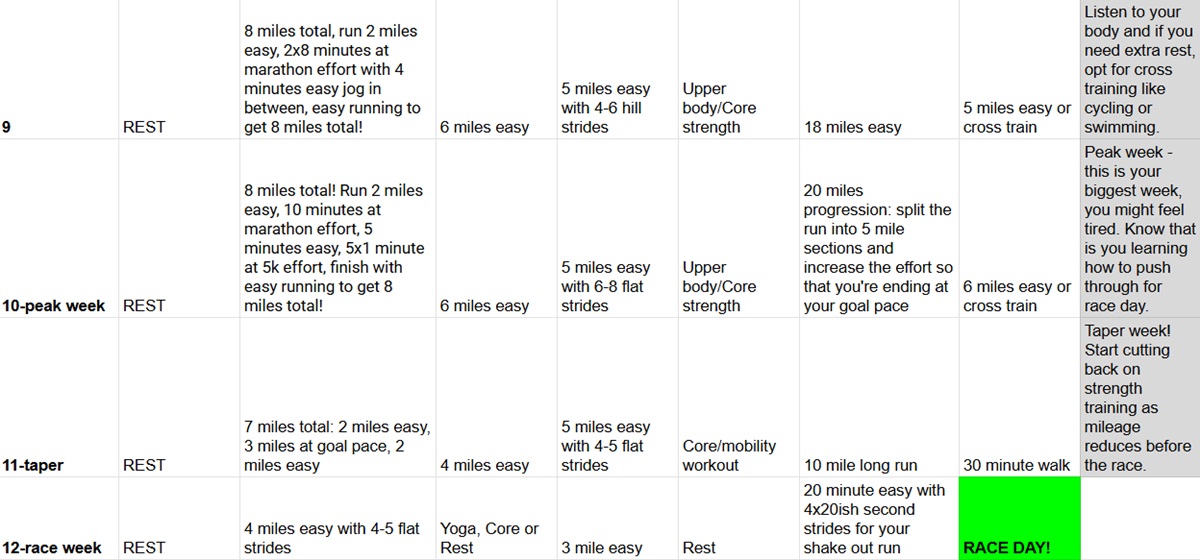
If a 20 mile long run feels like too much, it’s perfectly fine to scale back to 18. There’s no magic number you have to hit in training. What matters most is consistency and listening to your body. Those extra miles add stress, and recovery is just as important as the run itself.
Listen to your body, and if you’re feeling more fatigued than norma,l prioritize active recoverydays in place of a workout. Peak week is important, but overdoing it now can do more harm than good.
Weeks 11-12 (Taper + Race Week)
Speed workouts during the taper? Yep, it’s still part of the plan. But don’t worry, the workouts aren’t about pushing your body to its limit. Instead, they’re focusing on your goal pace so that you keep on practicing.
The taper is where you start dialing things back. Mileage drops, but a little bit of intensity stays in the mix to keep you feeling sharp. Cut back too much, and your legs might start to feel sluggish by race day.
Plus, having a little bit of speed helps to prevent the taper crazies!
If you’re looking for something that is more custom to your individual goals, don’t forget you can always reach out to us for 1:1 coaching!!
What Should You Do for Strength Training on This Plan?
Strength training is an important part of any training plan, no matter the distance. Strength training will reduce the risk of injury, improve your overall performance, and help you maintain better running form.
Do not make it super complicated and think that you need to spend hours at the gym.
- Lifting heavy early in training builds muscle for power
- Lifting during training builds endurance and prevents injuries
- 30 Day Core Program – gives you 10 minutes pre-run to work your abs, hips and glutes
- Neglecting strength doesn’t seem like an issue initially, but is often the downfall around peak week

You can run a marathon without doing all the things right.
But hitting your next level goal requires giving it just a little more commitment. It’s taking your fitness level from good to better by being willing to do the warm up, do the strength, do the recovery.
As it all becomes more routine, you’ll find these things can be done fairly quickly.
What About Rest Days?
Scheduled cutback weeks are intentional because, without that recovery, you are just piling on the stress and not providing time for your muscles, joints, and tendons to actually absorb the work and get stronger.
There is also 1 planned rest day each week, you can move it around but do not skip it.
As you go through training, listen to your body and if you’re feeling more tired than usual, take an extra rest day. It’s not worth it to push through just to check something off of your list.
Start to look forward to your rest days and not dread them. Remember that you can’t give it your all in a workout or even on race day if you’re constantly pushing on empty.
Ready to get started?
👉Get the full FREE 12-week marathon plan here >>
There is just SO much more that we could tell you to get ready for to run a marathon.
What to Read Next?
We’ve actually broken it down into several articles, so save this page and come back as you move through the phases to get the details.
- Marathon Pacing Strategy
- Marathon Fueling Strategy
- Running Hydration Guide + Marathon Hydration Vest Options
Good luck and have fun with your training!! Remember, we’re here for more tips or for that custom coaching to hit your big goals.



 53 Running Hacks for Summer, Running Faster, Saving Money and More
Leave a Reply