

Stack height is an important factor that will affect how your running shoe feels. It refers to the amount of cushioning material that separates your foot from the ground. Specifically we are focused on the stack at the heel, which will then impact the heel to toe drop and whether the shoe is considered low stack or maximal.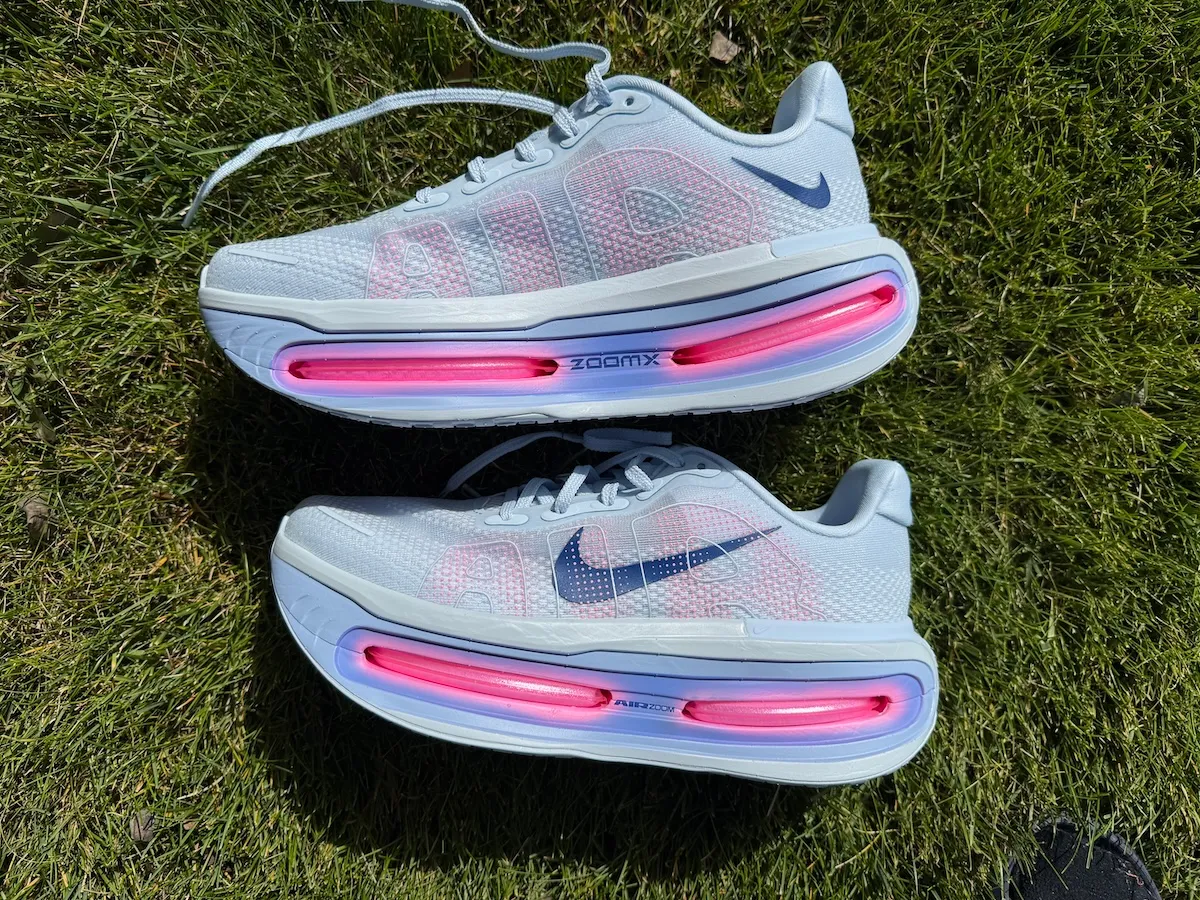 The Vomero Premium is an easy to understand example of a max stack height shoe. It’s a beehomoth of cushion underfoot.
But what is the ideal running shoe stack height and why does it matter?
Many people confuse it with heel to toe drop and use those terms interchangeably. They aren’t interchangeable, but no worries we will make these easy to underestand and you’ll be a shoe expert in no time.
What is Shoe Stack Height?
When it comes to running shoes, one of the most important factors to consider is the stack height. Stack height refers to the amount of cushioning material that separates your foot from the ground. It’s an important element in determining the degree of shock absorption and foot protection that the shoe offers.
This used to be referred to as a maximal shoe (HOKA) or a minimal shoe (Altra).
The stack height is determined by measuring the total height of the midsole, including the foam, air chambers, and other cushioning materials, from the ground to the insole’s surface.
The higher the stack height, the more cushioning. In contrast, a lower stack height means less cushioning and a more direct ground feel.
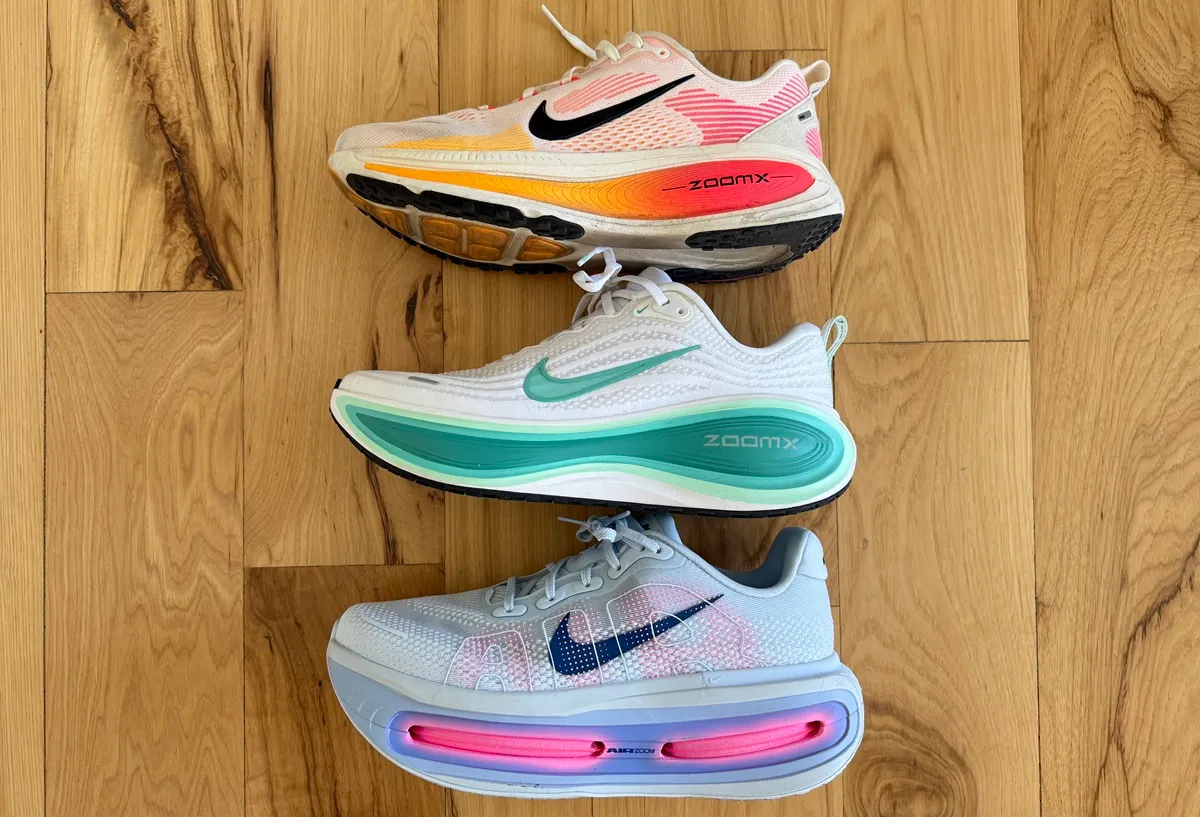
Is there a perfect stack height?
No.
But it can make a huge difference in how the shoe works for you. While our brains very quickly adapt to the higher stack, hence picking up our feet not to trip, it may take the tendons and muscles more time. I’ve seen a lot more ankle soreness since folks moved to wearing max cushioned running shoes all the time.
Similarly if you’ve been in a high stack shoe and suddenly go to less cushion and zero drop the calves get overworked.
Once again going back to the study that showed a good running shoe rotation reduces injury risk!
Stack Height Categories
Based on stack height, here are some main categories of running shoes, these numbers have changed over the last few years. What was once considered moderate daily trainer at 19mm is now very much a low stack height shoe because max cushioned shoes are all 40mm+.
When Hoka first launched at 32mm it was considered a massive shoe, so massive that runners laughed and wouldn’t wear it. Now it’s a moderate shoe!
We’ll link to round ups of shoe examples where we have them below to help you find styles in that range.
Barefoot: These have the lowest possible stack height at 1 – 8mm. They’re best for limited use for speed work or strides, or running on soft surfaces like even grass.
Minimal: These have a stack height of 9 – 13mm and are usually used for faster training or if you’re looking for a minimalist running experience.
Low Stack: These have a stack height of up to around 30mm. Most often these are lighter shoes and great for shorter races, but some folks also just prefer less cushion. Is this technically a category?? Ehh so so, but I do find that there’s a difference in the shoe at 29mm like the Kinvara and the daily trainer at 38mm.
Medium Stack: These have a stack height of 32 to 39mm. This is the moderate cushioned daily trainer and honestly by the time we hit 39mm we are getting in to a very well cushioned shoe.
Max Stack: These have a stack height of more than 40mm. They’re best for long runs and are also a great option for easy runs or recovery runs. This is also what you will find in more and more carbon fiber super shoes, as they are trying to maximize cushion.
You’ll notice that most carbon plated running shoes are max stack. That’s because the combination of the running shoe foam used with the plate creates the most bounce and energy efficiency.
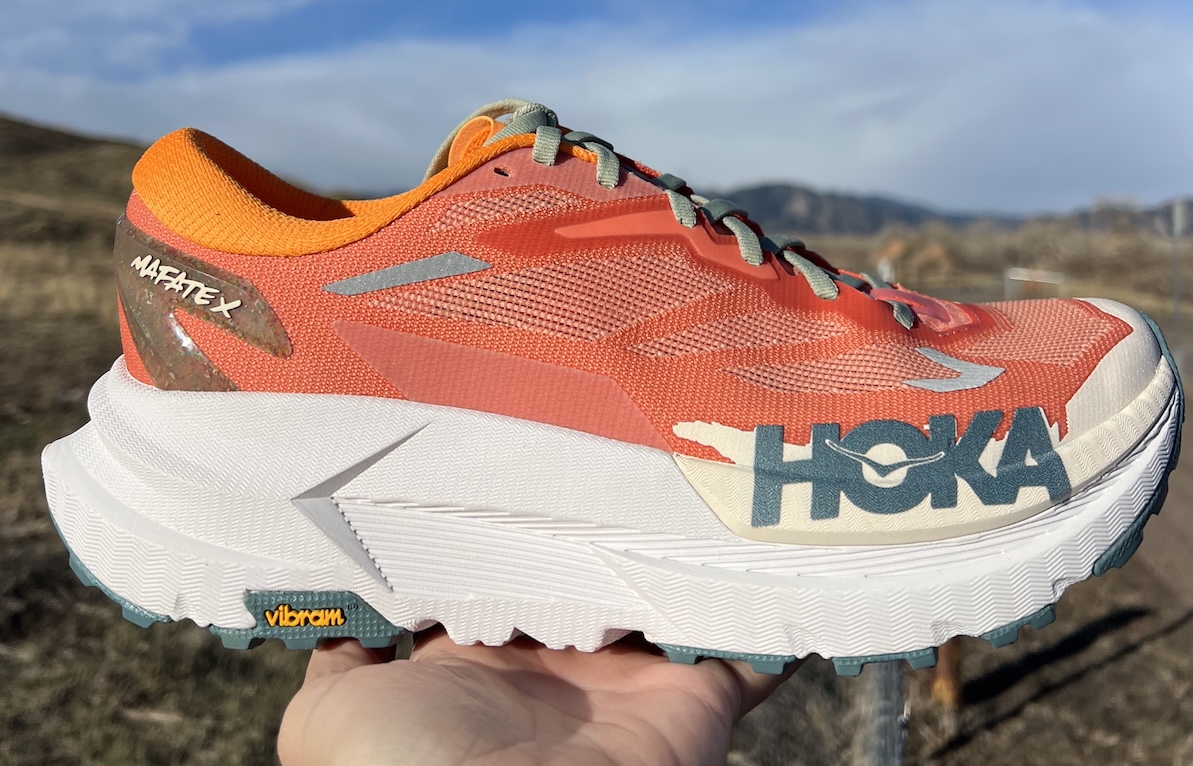
How to Measure Stack Height in Running Shoes
Measuring stack height is an important aspect of understanding the performance and comfort of your running shoes. It can help you determine whether a shoe is suitable for your running style, as well as provide insight into the shoe’s durability and support.
To measure stack height, you can follow these simple steps:
- Remove the insole of the shoe to expose the midsole. Some debate on this, but most remove the insole
- Use a caliper or a tape measure to measure the distance between the ground level and the midsole’s highest point (very specifically 12% from the end of the shoe). This measurement represents the heel stack height.
- The same process is then done at the forefoot to provide the lowest stack height and that’s how the heel to toe drop is calculated.
It’s important to note that stack height can differ between the heel and the forefoot of the shoe. This will be true in all running shoes that are not zero drop running shoes.
Checkout this article to better understand how heel to toe drop plays a role in knee pain or reducing issues like Achilles pain.

Stack Height vs Heel Drop
When it comes to choosing the right running shoe, stack height and heel drop are two essential factors to consider. Though honestly they’re overlooked because we’re drawn in by colors and flashy things! Now you’ll know more to find what actually works best for you.
Heel drop, offset, or heel-toe drop refers to the difference in stack height between the heel and forefoot of a shoe.
A higher heel drop means that the heel is elevated more than the forefoot, while a lower heel drop means that the heel is closer to the ground. Envision a high heeled shoe for a drastic example.

On the other hand, stack height is measured from the ground to the insole’s surface and is the total thickness of the midsole. It includes the heel and forefoot, and it’s usually expressed in millimeters as well.
A higher stack height means that there is more cushioning and protection between your foot and the ground, while a lower stack height offers a more minimalistic feel.
How Stack Height and Heel Drop Affect Runner’s Gait
While these two factors are related, they have different effects on a runner’s gait, in theory. The reality is that a great deal of it comes down to your stride and how you run. Some people will benefit from the cushion of a high stack height and others will simply overstride more as it masks what they are doing.
The stack height of a shoe also plays a crucial role in determining how it feels when you run. A higher stack height provides more cushioning and protection, which can be beneficial for runners who need extra support or have a history of injuries.
However, it can also make the shoe feel bulky and less responsive. We’re also seeing some data that running in max cushioned shoes all the time may result in higher impact on landing, we don’t yet know the result of that and need more studies.
A lower stack height, on the other hand, offers a more direct ground feel, which can be ideal for runners who prefer a minimalist shoe and want to feel more connected to the ground.
Stack Height and Ground Feel
The ground feel is an important factor for runners to consider and particularly important for trail runners, which is why we’ve seen a lot more low and moderate shoes stick around compared to the roads.
A higher stack height can reduce the ground feel and provide more cushioning, which can be beneficial for runners who are looking for a more comfortable and forgiving ride. We also believe that additional cushion helps the legs to recover faster by reducing the impact.
On the other hand, some runners prefer a lower stack height, as it provides a more natural gait and responsive feel. When the foot is closer to the ground, it can better sense the terrain and adjust accordingly.
This can help improve balance, stability, and agility, which can be especially important for trail runners who need to navigate uneven and unpredictable terrain.

It’s worth noting that the stack height isn’t the only factor that affects the ground feel. The type and density of the midsole foam, as well as the outsole design, can also play a role.
For example, a shoe with a thick midsole but a firm outsole may still provide a relatively low ground feel, while a shoe with a thin midsole but a soft outsole may still provide a relatively high ground feel.
Pros and Cons of Running Shoes with Different Stack Heights
There are different pros and cons to running shoes with varying stack heights. So let’s look at the same advantages and disadvantages of high and low stack height shoes to help you figure out which one will be best for your personal preferences:
High Stack Height
Pros:
- Greater cushioning and shock absorption
- Improved recovery from more cushion
- Improved comfort for runners with heavier builds
Cons:
- Less ground feel and reduced sense of connectedness with the running surface
- Reduced stability due to a higher center of gravity, leading to trips and falls
- Higher energy expenditure due to increased weight and shoe stiffness
Low Stack Heights
Pros:
- Improved ground feel and increased sense of connectedness with the running surface
- Improved stability due to a lower center of gravity, leading to fewer trips and falls
- Reduced energy expenditure due to lower weight and shoe flexibility
- Potential for faster times due to less shoe resistance against the running surface
Cons:
- Less cushioning and shock absorption
- Increased risk of injuries caused by insufficient impact protection
- May not be suitable for runners with heavier builds or those with a tendency for heel striking
- May cause discomfort and pain in the feet and joints due to the diminished cushioning



 Understanding Running Shoe Foams | TPU, EVA, PEBA and More
I used to run in stability Nike Pegasus, but after struggling, injury ridden through my first marathon, I switched to the then brand new Newtons. Researched, taught myself how to run in them and it was a match made in heaven! I've been faster and injury free ever since. Newtons just work well with my biomechanics, but they obviously aren't for everyone! Great post!
My recent post Weekend Recap: 1st Birthday Vineyard Snapshots + More Hills
that's awesome! I haven't tried them yet, but have heard from a lot of people who loved them!
I struggle with this. I have tried them all. Right now, I train and do long runs in Hokas for support but I find them too clunky for 5k races so I wear Mizuno Wave Riders.
I was rotating through a ton of brands, until I could finally feel a difference in my legs!
Having worked at a running store, I am all about trying new shoes. Every year when the running shoe companies tweak each model, those tweaks could make the shoe not work as well for you. My feet have also started to pronate more over time (thanks, arch collapse!), so I had to move from a neutral shoe over to a light stability shoe. I'd definitely suggest trying out different shoes, even if it's just in the store, every so often just to make sure that there isn't a shoe that's better/more comfortable for your feet!
My recent post Best Tips for Preventing Running Injuries
YESSS the tweaks. I know they are supposed to be better, but sometimes they make the shoe totally unwearable for me….I\’m not ashamed to say I stock up on shoes I love.
THis is so informative, thank you! I get so confused and overwhelmed when trying to find shoes, but this could definitely help!!
I have a small foot (women's size 5) so my biggest problem is finding a shoe that actually fits. Many brands start at size 6, which is just too big. I've tried Saucony, New Balance, Asics, Mizuno and always come back to Saucony. I've tried lots of different models, but for me the brand works.
That's so funny, my best friend in high school was like you where I was the size 11 and at that time they just hardly many any women's shoes that big!!
interesting debate – I've struggling with injuries and always relied on inner soles helping me out. But I would probably prefer the Hoka
My recent post Recipe Hacks – Chia Greek Yoghurt for a quick and easy protein boost.
I was trying to make things work with insoles and was surprised to see how much better my knee felt when I was willing to just try a new shoe. #stubborn
I have so many shoes in rotation! I read tons of reviews and make mental notes of the ones I want to try … and then snap them up when I see an online sale. Or when buying from my local retailers, I'll try on nearly every pair, buy the one I like best, but keep the 2nd choice in that mental list. I'm like Cinderella, waiting for the perfect shoe. Many come close, but I always have to wonder if there's something better!
My recent post review: BrightLife Go for all your compression-sock needs
Hi, I'm new to your blog, but I really have enjoyed what I've read so far! I'm glad I came across this post, I've been using Saucony Grid Rides for years, but have tried some minimal varieties too. The Hokas intrigued me, but I always thought they looked so unnatural and bulky, so I very much appreciated your info about them.
My recent post My Mindful Running Experiment
Thanks John!! I admit I was totally against them when they first came out because I was in a minimal shoe! But a friend asked me to give them a try and with knee pain at the time I was open to trying anything. Totally shocked me that they felt different than imagined.
I wear minimalist shoes, but what really makes a difference for me is the low drop, which both types have. The Brooks Pure line works well for me. I used to run in super minimal Merrell Bare Access shoes, but those left my feet aching once I started running longer distances.
My recent post Stability Ball Core Workout
Great post. I am a natural fore foot striker and feel good w/ my Saucony Guide (I have worn the Guides forever). I did recently take out the orthotics I wore since 2009 (I never knew they are only supposed to be a temp fix unless you have no arch and pronate). I was scared to take them out and noticed I was a little more sore after the first couple of runs, but now so far so good. What I struggle with is when to replace my shoes. Some people get so many miles out of them. My current pair is just over 200 and I feel like I am ready for a fresh pair!
Hi Amanda. I just wanted to point out that I think the Saucony Kinvara is a 4mm drop shoe, not a zero drop. Also, I'd be interested to hear how you think the Clifton compares to the Clifton 2, and if you have tried any other Hoka models. Thanks!
Oh my gosh, DUH!! I totally knew that, I must have been caught up in getting this done. Thank you!!
And yes here is my review of the two models: https://runtothefinish.com/2015/06/hoka-one-on…
I went to a shoe clinic store and had myself tested and fitted. They put me in Brooks Adrenaline and I'm now on my second pair. I get the impression they are quite high on the scale of shoe support?
They seem to be okay so I guess no need to change?
Would love your view on when to change shoes. I have just the one pair and have run about 500km in them in six months. I've read various opininons on what mileage you should get out of them.
My recent post 2 weeks to go!!
Mileage can vary by runner, but 500miles is generally about right. Most runners start to notice a lot of fatigue in their legs or little things starting to hurt and that\’s a sign it\’s time for new shoes. As they break down they can alter your gait or the absorption is gone and that\’s the issues we feel.
I switched to minimal shoes after reading Born to Run, but didn't do a good job of easing myself into them. I never got injured (luckily) but when I decided to get a more moderate pair when my Nike Free 3.0's were worn out, I really enjoyed the extra cushioning. I now run in Brooks Pure Cadence and love that they're a bit in between. My very first pair of running shoes were a pair of heavily cushioned Asics, and I can never go back to them after running in lighter shoes – they felt so HEAVY when I was running.
My recent post Have you seen College Humor’s hilarious video about running?
as a weak-ankled person, stability sneakers all the way
I was five finger for ALL THE THINGS for close to a decade.
EVERYTHING.
now Im never seen with out my HOKAS :-)
My recent post You shouldnt bowl fruit.
I’ve been running in Kinvaras for years and just added the Sketchers gorun4 to the mix for the road. When I moved to CO, I got a pair of Brooks PureGrit. They’re great, but the long mountain runs with lots of rocks are starting to wear on me. I ordered a pair of Hoka Challenger ATRs based on some demos. Here’s to hoping they work!