

After Faith Kipyegon’s incredible attempt to break the 4 minute mile, we’ve got a feeling the mile is about to have a serious moment in the running community. If you’re wondering what it takes to run a faster mile, here are some tips whether you want to race the clock or just see what you’re capable of.

I’ve already talked about how to run a mile without stopping, so we’re going to skip over that here. This time, we’re talking about what to do if you want to run faster. Maybe you’ve signed up for a mile race, or you’re just curious how fast you can run four laps around the track in a time trial.
But first, we have to be honest, there’s no one-size-fits-all answer to what makes a “good” mile time. It’s going to depend on a bunch of things like your age, fitness level, and gender. And of course, the uncontrollables like weather, altitude, and how your body’s feeling that day can play a role.
How to Improve Your Mile Time
From many years of personal experience and coaching lots of athletes, Coaches Stacey and Amanda have put together some strategies and training tips below to help you run a faster mile.
1. Develop Your Running Base
Running consistently is one of the first keys to improving your mile time. The body simply needs practice to adapt to what running feels like before really gaining speed.
Beginner runners should look at slowly building base fitness by increasing time on feet each week. This increase in mileage over time will help your body adapt, build your endurance and stamina, and ultimately lead to increases in speed.
That’s right, more easy mileage will improve your mile time! This is still considered an endurance event.
2. Follow a Structured Training Plan
Once you’ve built a solid base and you can make the transition to follow a structured training plan to meet your speed goals. This training schedule should have a mix of workouts. Some of what you will see on a more structured training plan are:
- Easy conversational pace runs
- Speed Workouts
- Long Runs (easy and with speed)
- Rest Day
- Cross Training
- Strength Training
We’ll go into more detail about these different parts of a more structured training plan below.
Remember that we need a variety of workouts, including running easy enough on our easy days to have the energy to truly go hard on our speed days.
3. Include Interval Training
As we mentioned above, it’s important to incorporate a variety of workouts into your training. Speed work can include intervals, hill sprints, and fartleks, which are all designed to help you build speed and endurance.
By pushing yourself to run at a faster pace during these sessions, you will be able to carry that speed into your mile race.
Here’s a few different workouts to try:
- Fartlek or Speed Play- no set pace, just run based on what your effort feels like that day
- 2 mile easy jog to warm up
- 6x 2 min hard effort with an easy pace recovery until you feel ready for the next interval
- Run easy until you reach 5 miles total
- Track Intervals – head to a track or a flat, uninterrupted route
- 15-20 min warm up jog (if running at the track, do not warm up on the track)
- 4×200 at 5k effort, 75sec recovery
- 2 min easy pace
- 4×200 at 3k effort, 90sec recovery
- 2 min easy pace
- 2×200 at mile effort, 90sec recovery
- 15-20 min cool down (if running at the track, do not cool down on the track)
- Hill Repeats – If you run this on a treadmill, vary the incline between 5-7%
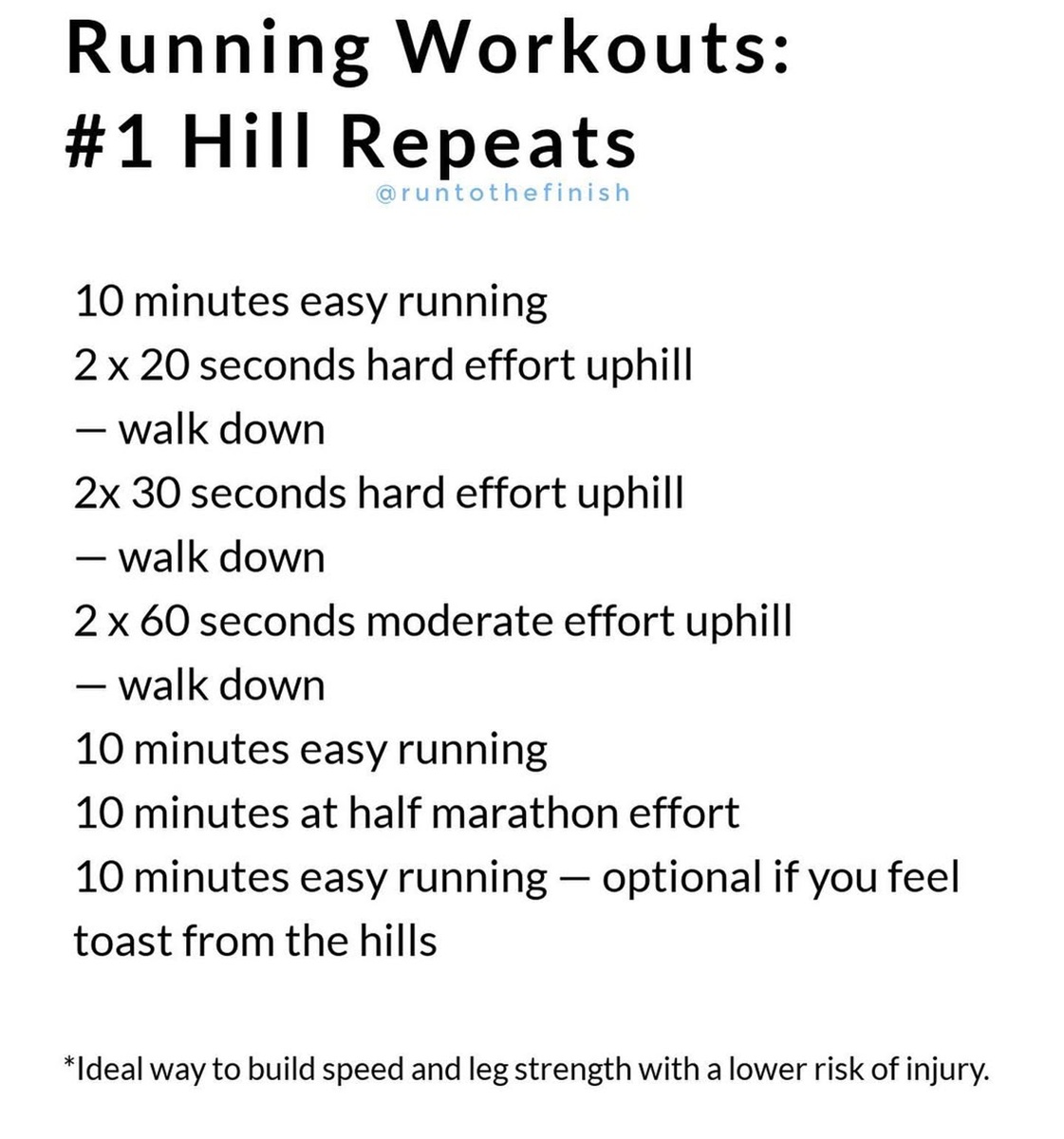
- Progression Runs – gradually increase your effort for a strong, fast finish
- 10 min warm up at easy pace
- 30 minutes of running, increasing your pace every 5 minutes
- Final 5 minutes should be the fastest effort of the workout
- 10 min cool down at easy pace

If the track makes you nervous, checkout our beginner running track guide. There we’ll explain the laps and etiquette.
Another option is to find a place that’s flat and where you can easily mark the distance. A rail trail or bike path are two great options. Often they have distance markers, although I’d double check that they’re accurate with your watch as sometimes they can be off by a bit or even a lot.
4. Incorporate Strength Training and Core Exercises
When increasing your intensity in training or adding speed workouts, it’s even more important to increase your overall strength. This prevents many running injuries, which ensures you can continue training consistently. Consistent training is the ONLY real way to see progress.
You’ll need muscle to have power to propel yourself forward at top speed.
We’re not talking about spending hours in the gym or lifting the heaviest weight possible. If you give yourself 20-30 minutes to focus on some of the basic exercises, your future self is going to thank you as you sprint to the finish line of your mile.
The 30 Day Core Program is just 10 minutes a day to hit all the areas that runners need to get faster and prevent injuries, a great starting point if you haven’t been doing any!!
Meanwhile our strength training for runners program, will help you take that up a notch and continue to improve your running
5. Improve Running Efficiency
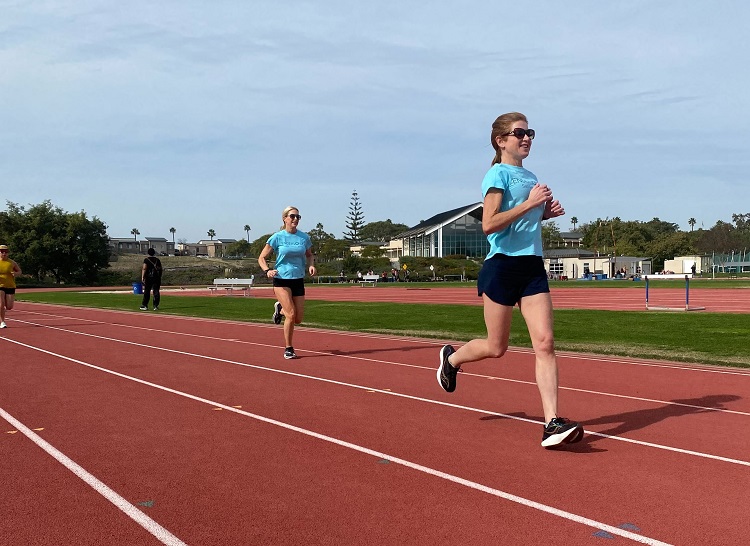
Having a strong running form is going to help you run faster and more efficiently.
Some things to think about as you start to pick up the pace:
- Keep your shoulders relaxed and avoid scrunching them up to your ears
- Avoid holding your hands in a fist and pretend that you’re holding a potato chip between your fingers
- Pump your arms front-to-back, slightly grazing your hip with your hand to propel yourself forward
- Land lightly on your feet with each stride
- Try to maintain a steady cadence. You can use a metronome app or even put together a playlist with a certain BPM
Honestly, I wish that someone had encouraged me to start doing running drills when I first started. It’s just like practicing in any other sport to find efficiency!
6. Cross Training
Cross-training is more than just the go-to option for when you’re injured. Even elite athletes are swapping out some of their runs for lower-impact workouts to reduce the amount of stress on their bodies.
It’s a way to build intensity without being too much on your body. A tempo session on the bike or elliptical can challenge your heart and lungs just like a hard run, but at a much lower impact.
Here are some ideas of what to do for cross training:
- Cycling (indoor or outdoor)
- Elliptical or Arc Trainer
- Swimming
- Aqua jogging (we highly recommend)
- Bodyweight circuits
- Rowing or Ski Erg
We have a Tread Lightly podcast episode where we spoke with Mary Johnson about how incorporating cross-training will help you become a faster runner.
7. Focus on Nutrition
Everyone’s dietary needs are different and many of us have sensitivities to certain types of food. As a result, nutrition is a very personal thing.
Regardless, ensuring we’re properly fueled and eating a well-balanced diet is important to our overall health and to our running.
Stay hydrated with a good electrolyte powder and eat a balanced diet. Proper nutrition and hydration are crucial to maintaining optimal performance.
One interesting thing that I’ve written about in the past is the benefit of eating foods high in nitrates, like beets, dark leafy greens, and even dark chocolate. Nitrates are converted to nitric oxide in the body, which is linked to vasodilation, allowing our blood to carry oxygen to our muscles faster.
8. Prepare Mentally
When you’re pushing your body to its limits, it’s usually your brain that throws up the red flag first. That voice in your head that says “you can’t hold this pace” or “just slow down a little”.
Running a fast mile is supposed to feel tough. It’s short, but that doesn’t mean it’s easy. Once your legs start burning and your breathing gets heavy, your brain will do everything it can to convince you to slow down. And without fail, it usually tends to happen in that last quarter mile when your effort matters the most.
That’s why building mental toughness is just as important as physical training. It’s just another piece to the puzzle of becoming a stronger and faster runner.
How Long Will it Take to Run a Mile?
Well, the short answer to this question is that it depends.
There are several factors that play into how fast a person can run a mile:
- Age group – without consistent training, our pace per mile decreases with age
- Gender – noted below, there are some physiological differences
- Effort – are you racing the mile or simply going out for an easy run?
- Fitness level – impacts muscle, power, and coordination
- External factors – weather conditions, altitude, and terrain
- Weather – heat and humidity are 100% going to make it feel harder with your HR being high from the start
On average, it takes a beginner runner around 10 to 12 minutes to complete a mile. As you get more experienced and improve your fitness level, you can expect to run a mile in 8 to 10 minutes. Elite runners can run a mile in under 4 minutes.
Once you’ve run your mile race or time trial, make sure to make note of some of the key factors about the run, specifically the weather, hydration, energy levels before you started, and what your recent training has been like.
That way, you can reference these in the future each time you attempt the distance to see how you can improve.
But as I said earlier, the most important thing to remember is that, regardless of whether it takes you 6 minutes or 16 minutes to get through a mile, it’s still a mile all the same.
Want to learn more about how to run a faster mile? Listen to Episode 66 of the Tread Lightly Running Podcast.



 Brooks Hyperion Max 3 Review | Divided Minds On This Supertrainer
Leave a Reply