
We talk about running shoe rockers in a lot of our reviews, but what does that actually mean? Why do some shoes have more noticeable rockers than others, and who really benefits from it?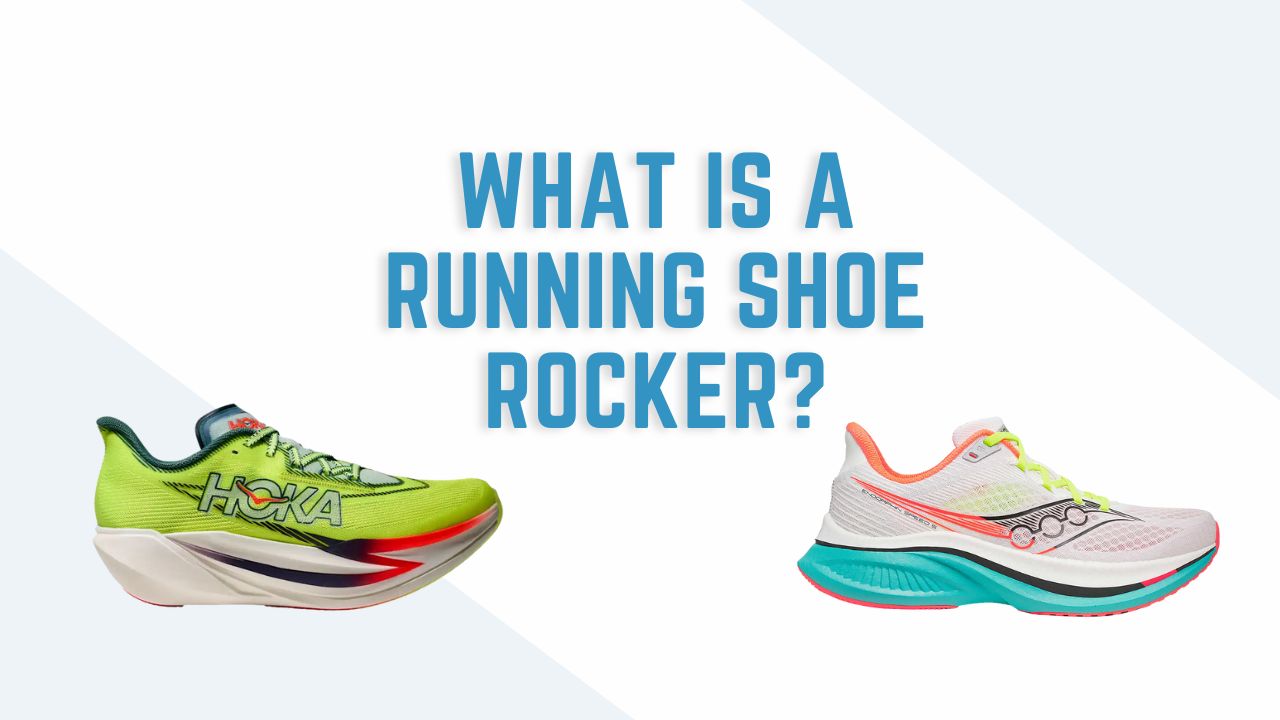
It’s not just a bold design choice. A running shoe rocker is there for a reason.
Research shows that this curved shape can help guide your foot through each step and may take some stress off your muscles. They became increasingly necessary with the max cushioned running shoe and are obviously also present in carbon plated running shoes.
That said, a rocker isn’t a magic fix. It won’t automatically make you faster or stronger, and whether it feels good really comes down to what your body needs as a runner.
Let’s break it down and take a closer look at how a running shoe rocker works and why it can make a difference in your run.
What is a Running Shoe Rocker?
If a rocking chair or rocking horse pops into your head when you hear running shoe rocker, you’re not far off. But we’re also not talking about what Skecher’s did way back when that lead to a lot of foot injuries.
The curved shape built into the sole helps your foot roll forward with each step.
This design has become more common as shoes have gotten taller and max cushioned. With all that foam underfoot, it can be harder to move naturally from landing to toe off.
The rocker helps guide that motion and keep your stride feeling smooth.
Not all rockers feel or are designed the same. Some have a more dramatic curve with the toe pointing upward, which can make faster paces feel easier to hit.
Others are a bit flatter and more subtle, which tends to feel better for long runs and everyday miles.
Types of Running Shoe Rockers
You may not notice it at first glance, but if a running shoe has a rocker it’s going to fall into one of two categories:
👉Heel to Toe Rocker
This style rocker runs the length of the sole, guiding your foot forward from the moment you start running. It’s especially helpful for runners who land on their heels and want a smooth, rolling feel with each step.
👉Toe Rocker
Here, the rocker is more noticeable from the midfoot through the toes. It gives a little extra pop as you push off, which many forefoot or midfoot strikers tend to enjoy when picking up the pace.
This is different than toe spring, which we’ll address another time!
Running Shoe Rockers by Brand
Every brand has its own spin on a running shoe rocker, and the feel can vary more than you’d think. Some are built to help you move along race day, while others are there to keep things feeling smooth during long training runs or easy miles.
Here are a few of the running shoe rockers you’ve heard our team talk about in our reviews from Asics, Saucony and Hoka.
Asics GUIDESOLE
It might not jump out at you when looking at some Asics models, but GUIDESOLE technology is designed to help reduce fatigue, especially on longer runs.
The design combines a firmer layer of FLYTEFOAM Lyte, a softer, bouncier layer of FLYTEFOAM Propel, plus GEL in the heel for added shock absorption.
All of that works together to create a smooth, forward rolling ride.
In simple terms, the shoe helps guide your stride so you can keep moving efficiently without feeling like you have to work as hard late in the run (or race). 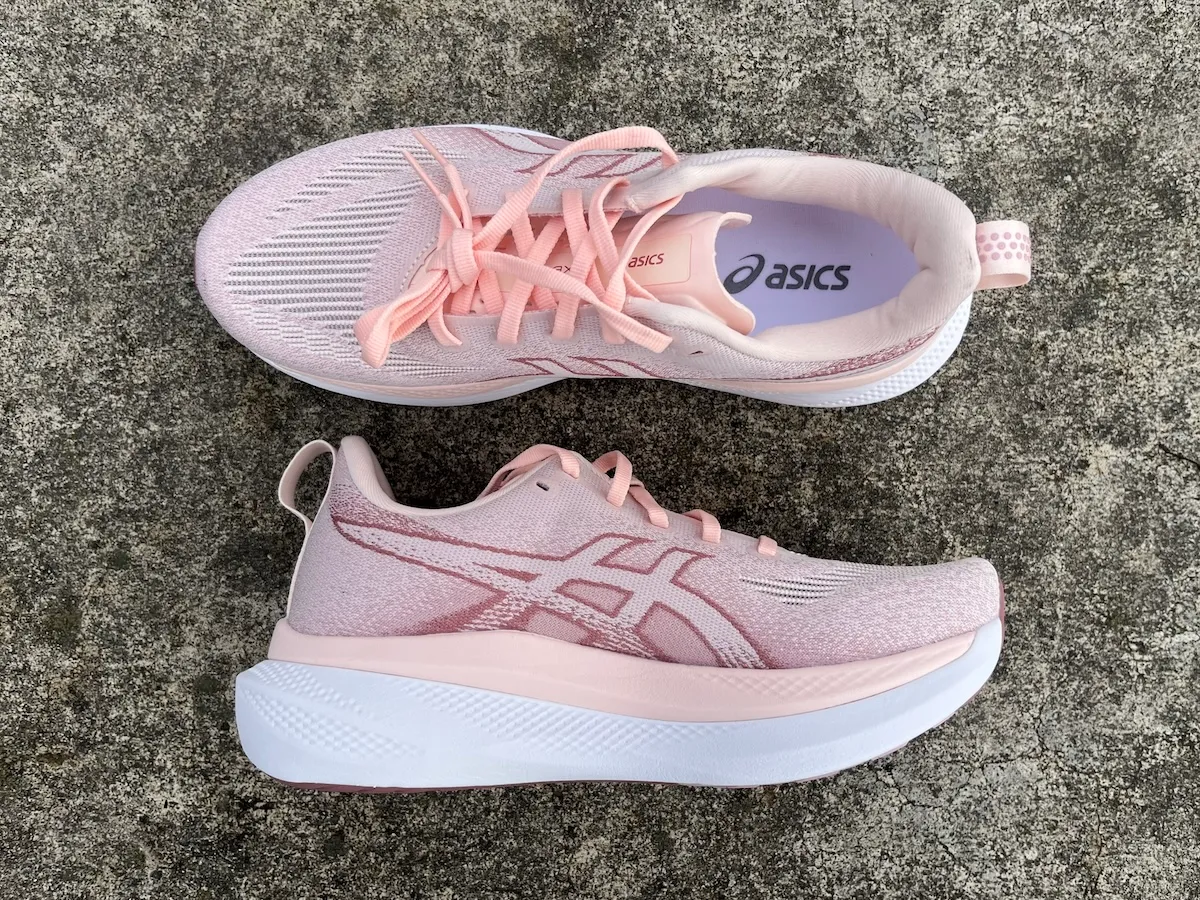
Check out our review of the Asics Glide Ride Max 2 to learn more about this technology.
Saucony SPEED ROLL
Found in Saucony’s Endorphin lineup, the SPEED ROLL technology is paired with Saucony’s PWRRUN midsole and sometimes a plate (the Azura is the only shoe in the Endorphin lineup with NO plate!). These shoes are typically what you’ll grab when you want to pick up the pace, whether in a workout or on race day.
The mix of cushioning and a firmer forefoot is what gives that quick, snappy feel without being too much. Instead of feeling overly soft, each step rolls forward smoothly, so it’s easier to settle into a rhythm and maintain or pick up the pace.
Even as a forefoot striker, I still notice how the rocker and foam work together to keep transitions feeling natural. 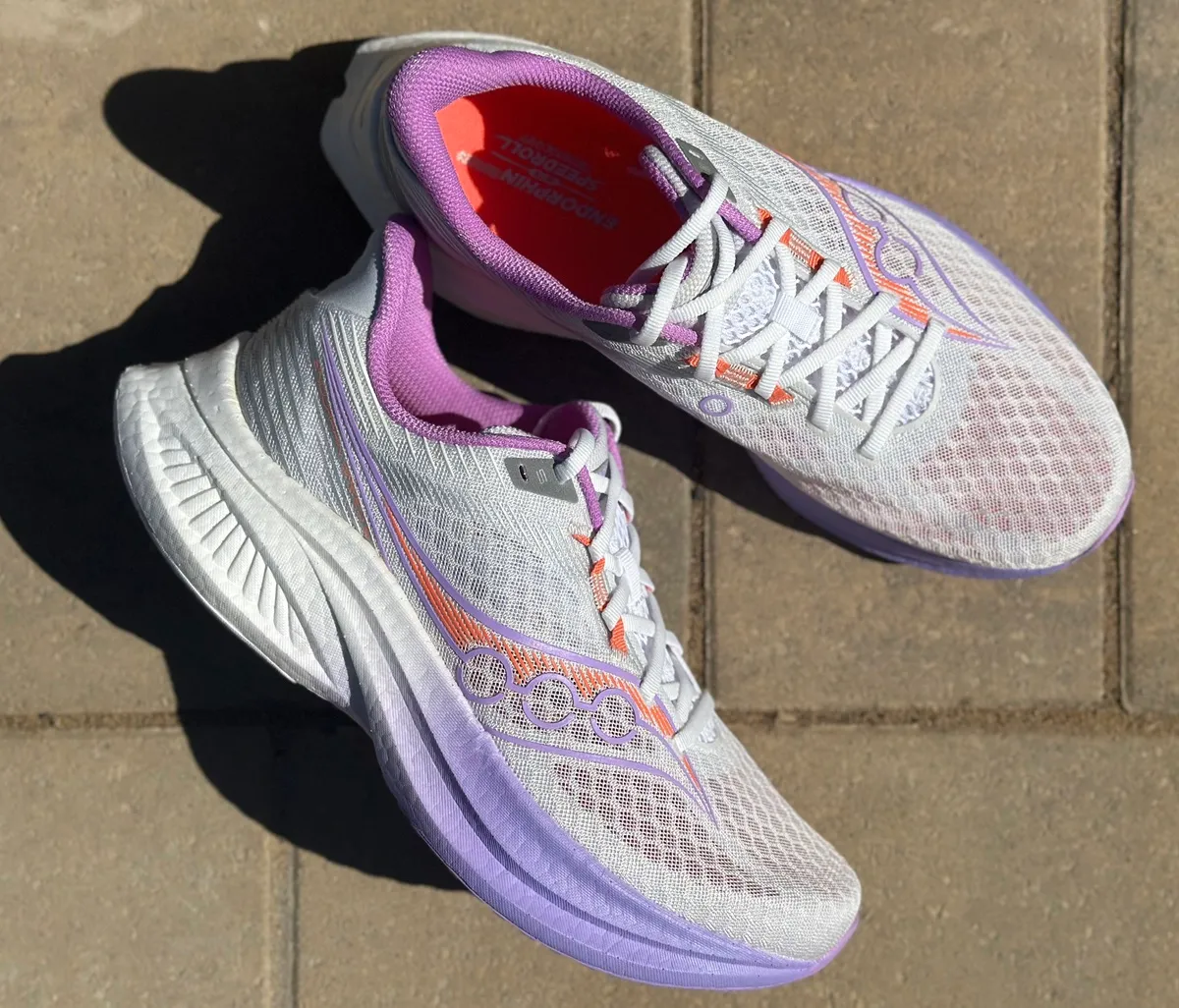
Here are some of our recent reviews of the new shoes in the Endorphin Line so that you can read more about the rocker: Endorphin Pro 5, Endorphin Speed 5, Endorphin Azura
Hoka Meta-Rocker Design
Hoka is kinda where the running shoe rocker first got noticed. The meta-rocker is one of its three core technologies, found in every pair of Hokas.
Depending on the model, Hoka uses two types: early-stage and late-stage meta-rockers. This simply refers to where your foot starts to roll forward during your stride.
Shoes built for speed workouts or race day usually have an early-stage rocker to help you move quickly through toe-off (like the Hoka Mach).
Shoes meant for easy runs, long miles, or a bit more stability tend to use a late-stage rocker, which feels smoother and more relaxed as you take each step.(like the Hoka Gaviota)
Check out our review of the Hoka Mach 6 to learn more about the Meta Rocker.
Brooks GlideRoll Rocker
This is one of my favorite shoes for easy runs, recovery days, and longer easy pace efforts.
The way the Nitrogen-infused DNA TUNED foam is built – one layer with big cells in the heel and small ones in the forefoot – allows the shoe to absorb each landing, uses the GlideRoll rocker to match a step’s natural forward motion, then the small cells in the front aim to give a quick bounce up and forward feel.
Instead of feeling like you’re squeezing a marshmallow with each step, the GlideRoll provides a smooth transition from heel to toe. 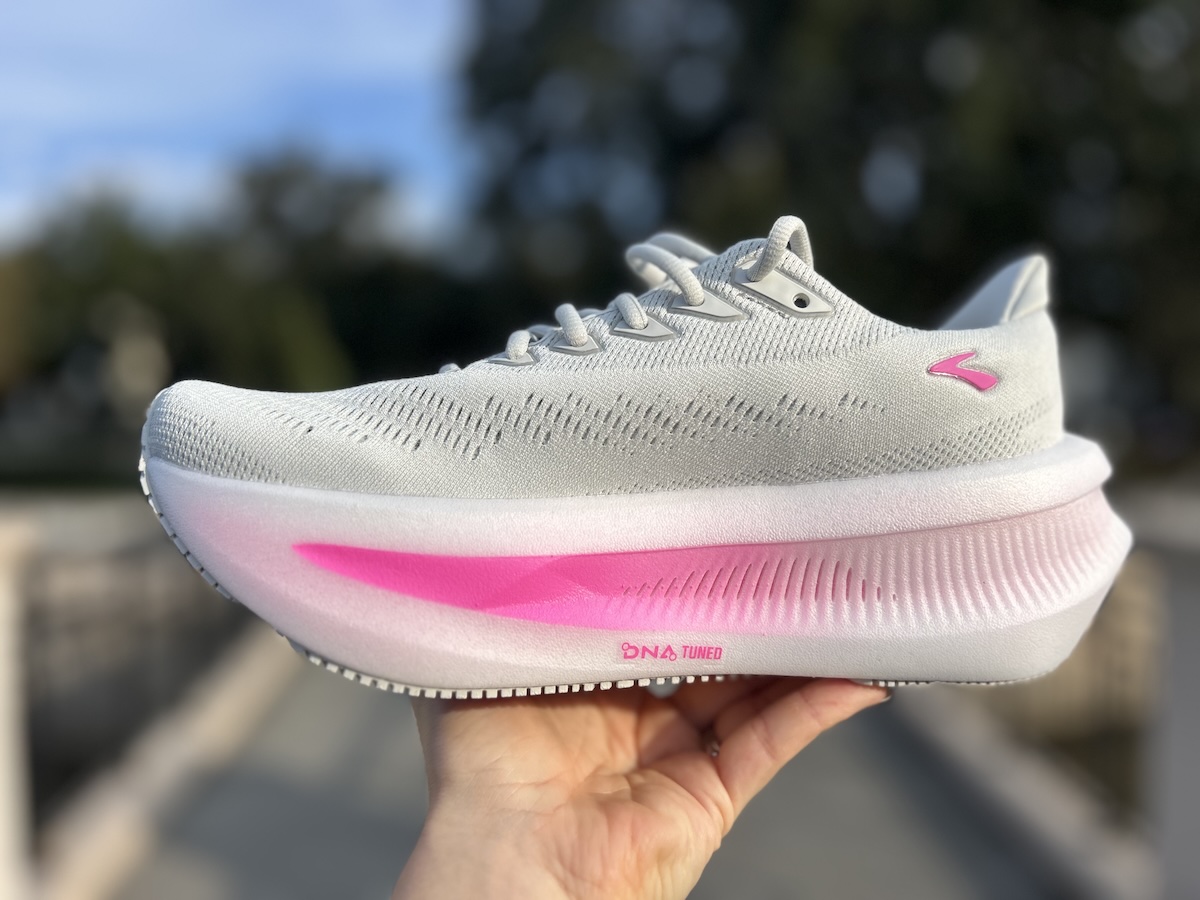
Want to learn more about the GlideRoll technology? Read our full review of the Brooks Glycerin Max 2 .
Who Will Benefit from a Running Shoe Rocker?
A running shoe rocker can absolutely change how a run feels. If you’re dealing with things like tired calves, stiff ankles, or just feel like your stride needs a little help rolling forward, a rocker design can make each step feel smoother.
That said, it’s not a magic fix. A shoe can help things feel better on the run, but strength work, mobility, and smart training still matter most for staying healthy and running strong.
If you have or are experiencing any of the following, a rockered shoe may be a good pick:
As someone who has dealt with plantar fasciitis and tends to run more on my forefoot, my calves used to take on a lot of the stress during training. Once I started wearing shoes with a rocker, I noticed things just felt smoother overall.
Instead of feeling like I had to work even harder or force the pace, each step started to roll forward more naturally. On longer runs, especially, that little bit of help makes my stride feel more relaxed and my calves way happier.
We hope this info about running shoe rockers was helpful. What shoes are you running in? Do they have a rocker?
What to read next?
- Heel Toe Drop: What It Is And Why It Matters
- What is Stack Height? Here’s Why It Matter in Running Shoes
- Best Moderate Cushioned Running Shoes: Not Too Much, Not Too Little



 Skechers Aero Razor Review | Stop Sleeping on Skechers Running Shoes

Leave a Reply