

Nothing is more frustrating than stepping on the scale after consistently eating healthy and working out and gaining weight instead of losing. If you’ve been struggling, then this is going to help set your mind at ease or give you some specific steps to consider.
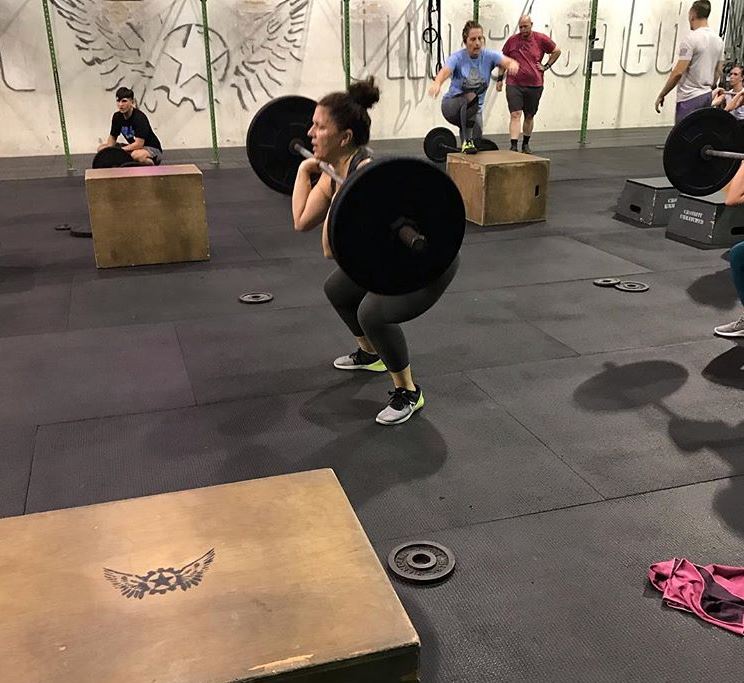
Worse yet, you’ve crushed your longest run ever, yet the following morning Grrrrrr the scale has risen!!
It can feel demoralizing at times but understanding exactly why this could be happening is key to figuring out how to stop it or work around it.
So, if you’ve been working out but gaining weight, let’s talk about the culprits and when NOT to worry.
9 Causes of Working Out But Gaining Weight
First off, don’t panic.
Second, we all KNOW that the scale isn’t the best measure of our bodies or our progress, right???
None the less, I know I’ve found myself at times wondering what the heck is happening. and based on discussions with friends, you probably have too.
Is marathon weight gain a must? And is all this running making us fatter?! Uh no.
Let’s look at the top reasons and causes for gaining weight when you’re working out:
1. You’re Experiencing Muscle Inflammation
A required part of running or strength training is that we stress the body and thereby breakdown muscles. The result of this inflammation is our body retains water to help with the repair process.
So after a lift, a long run or an interval session you might notice the scale is up for a few days. That’s part of DOMS or delayed onset muscle soreness. Your body is simply adapting to the stress of that weight training session.
The other reason could be a fairly common one: as you start a new exercise routine or increase the intensity, it puts stress on your muscle fibers which cause small micro tears in them which are also known as micro trauma. This causes also inflammation.
Once the inflammation recedes, that water will drop and you should have built some muscle which will speed up your metabolism.
#2 Your Increased Carbohydrates Are Causing Water Retention
In order to adequately fuel your workouts, you need carbohydrates for glycogen conversion. Your body breaks that down into glycogen (fuel), which is a form of glucose.
Since glycogen has to bind with water to be able to fuel your muscles, carbohydrates can cause the body to retain water. This is a good thing for runners who want muscles to be plenty hydrated prior to long runs or summer runs.
Athletes know after a workout, you want to get glycogen into the muscle tissue because it speeds up the recovery process. If you skip the recovery fuel or don’t take in enough during the workout, then you will be setting back your progress.
Fortunately, over time, your muscles will become more efficient and require less glycogen to maintain the energy levels you need so this weight gain is only temporary.
Muscle growth for fat loss or to “tone” up, requires fuel.
This is also a common reason for weight loss on high-fat diets. Sometimes referred to as whooshing, when the body lets go of that retention.
WATER. They are losing water weight, not fat.
Do not trick yourself into believing that by reducing carbohydrates you’ll lose weight. We know that especially for women it results in hormonal imbalances that long-term lead to weight gain and messes with your metabolism.
#3 Dehydration Causes Water Retention
Are you noticing a pattern here? The number on the scale is going up because your body is working hard, not because you are truly putting on fat.
This is another one that feels counterintuitive, but if you are not hydrating properly or perhaps did a super long sweaty workout the day before your dehydration will cause the body to hold on to all available water.
Additionally, being dehydrated degrades your performance. You aren’t able to go as far, as fast or lift as heavy. Which means then you have decreased your total calorie burn.

#4 You’re Building Muscle and Losing Fat
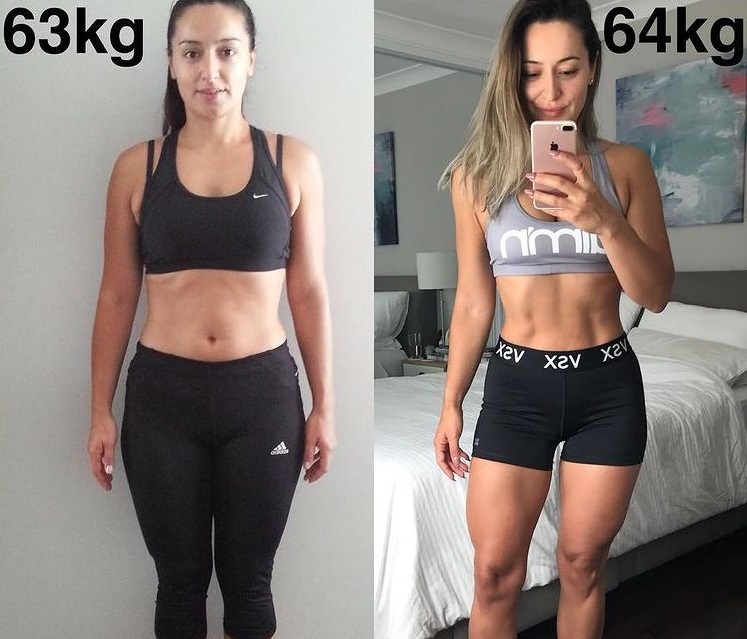
Because muscle takes up less space than fat, it’s very common to see bodybuilders with enviable six-pack abs who weigh more than someone looking to lose weight!
Muscle mass is a lot denser than fat mass and that’s why you’ll gain weight from lean muscle gains.
This is why we MUST use tools other than the scale to judge progress. I’ve written about this in more depth in my article on does muscle weigh more than fat.
Remember, the goal isn’t weight loss, it’s FAT loss. And to lose body fat you need to build muscle to change the shape of your body and burn more calories even at rest.
While running can tone your legs, that full body fat loss you’re looking for requires a combination of strength and cardio. There are a number of studies to prove this, so don’t let anyone convince you that either one is better or worse. Do both.
#5 You’re Eating as a Reward
I know many of you are eating right, but sometimes we tend to reward ourselves with more calories than our bodies truly need.
But it’s super easy to finish that hard workout, feel so proud of yourself and then easily justify the cookie, the extra slice of pizza, and the extra drink with “well I worked out”.
Suddenly that becomes our default and we are now taking in more calories than we burned.
We KNOW that our workouts are about so much more than the scale, so don’t let it occupy too much of your brain space. Keep focused on the way it’s making you feel more confident, stronger, and healthier.
Focus on a healthy diet with a mix of fruits and vegetables instead of unhealthy snacks as much as possible.

#6 You’re New to Exercise
“I started exercising and I’m gaining weight” – it’s a bizarrely common refrain…let’s talk about why!
If you’re just starting a new exercise program or changing to a more intense training plan, then that could be the culprit for an initial increase on the scale.
The reason your body feels like it was run over by a truck when you start working out again after a lull is due to stress in your muscle fibers.
Exercise causes micro tears and inflammation, two culprits the temporary weight gain.
- Muscles repair damaged tissues through protein synthesis, which requires water retention.
- In order to properly heal the tears, the body retains fluid in the area.
- Voila, we’ve explained your temporary weight gain.
As your body adjusts to the new program, this will become less frequent and suddenly one day you’re body will shed the water and you’ll also have found yourself losing fat from the work!
7. You’re Sedentary the Rest of the Day
Another thing that tends to happen for many people is that when they start working out, they feel it’s okay to not move around for the rest of the day.
NEAT, or non-exercise activity thermogenesis, is a quick and easy way to burn an additional 200 calories per day without working up a sweat. You can increase your calorie burn without going to the gym by doing things like cooking, gardening, walking your dog, and taking the stairs.
A post-workout walk can relieve muscle soreness and fatigue, making you feel better and less likely to skip the next day’s workout.
If you keep moving throughout the day, the lactic acid that builds up in your muscles will release and help loosen up your muscles.
8. You’re Overtraining
Another reason you may be working out but gaining weight is if you’re overtraining.
While getting enough physical activity is important for your overall health, overtraining and not getting enough rest in between workouts can prevent you from losing weight. This is why it’s important to find a good balance between exercise and rest. Always remember, moderation is key!
Overtraining may result in an increased cortisol levels, which is a stress hormone. This is especially true for cardio activities that are harder on the body, like training for a marathon or triathlon.
Even though this hormone is important for health, chronically high levels of cortisol have been linked to problems like weight gain, sleep problems, more inflammation, and even belly fat in generally lean people.
Chronically elevated cortisol levels can cause weight gain or make it more difficult to lose weight because they stimulate appetite and cravings for high-calorie, high-fat foods like junk food and fast food.
To avoid gaining weight because of stress, it’s smart to cut down on your workouts, give your body time to recover between workouts, and add activities like yoga or meditation that lower cortisol to your routine. This is extra important for those training through perimenopause and after menopause!
9. You Have an Underlying Health Condition
While this is a much less likely explanation than the others, it is possible that your weight loss efforts are being hampered by a medical condition.
Even if you eat well and exercise several times per week, hormone-related conditions, particularly thyroid issues, can cause unwanted weight gain.
If this is happening to you or you suspect that your thyroid medication is causing a higher number on the scale, you should consult your doctor.
How Long Does Temporary Weight Gain Last After Exercise?
There are a number of factors that come in to play here. Like how often are you exercising at an intense level which is creating that inflammation we talked about, how new are you to exercise and are you hydrating properly.
But in general if you see the scale go up a few pounds after a workout, that could last for a couple of days. If you then do another hard lifting session or long run, it may remain elevated.
Remember however this does not mean you have put on FAT.
Take a complete rest day and usually the next day, you’ll find yourself letting go of a lot of water as the body has had a chance to recover. Obviously you can’t just rest all the time or you won’t make any gains!
So follow a strength training plan with progressive overload, which will build in that recovery and lead you through training in a smart way. Remember that a higher number on the scale doesn’t mean you aren’t moving towards your weight loss goals.
Because the goal is a stronger, fitter, healthier body and that doesn’t show up on the scale.
5 Tips to Prevent Gaining Weight After Working Out
A few other factors could be in play if you’re doing everything right, but still unable to lose weight. Or more notably, you see something odd like that scale going up the day after a long run or marathon. It’s NOT FAT.
Drink More Water
It may seem strange, but dehydration actually increases water retention.
When you’re not drinking enough water, your body retains more water as a safety mechanism to prevent water levels from becoming too low.
- Fill a large container and take it will you all day
- Add a lemon or some electrolytes to your water to encourage drinking
- Electrolytes will also contain sodium and potassium which will get water in to the muscles for your workouts
- Set reminders in your phone to drink
Increase Your Sleep Time
Catching enough zzz’s is so important for marathon training that I wrote up key tips to improve sleep quality.
Sleep is key to recovery from exerted efforts, like long distance running or killer workouts in the gym. When we don’t get enough sleep, the hormones that regulate our hunger cravings get out of whack, causing intense cravings.
Because you are now working out, you may need more sleep than previously.
This is the time where your body is able to repair muscle damage, which is how you build muscle to get stronger or run faster.
Incorporate Appropriate Rest Days
If losing weight is the impetus to begin a new exercise routine, then you may feel like you MUST workout every single day.
This is flawed thinking.
Rest days are crucial for the body to recover from the effort, which is when our muscles are able to grow and our endurance to increase. If our muscles cannot repair themselves, then our body is constantly inflamed and inflammation means the body holds on to extra water.
If you want to maintain a daily habit, that’s a fabulous way to stay on track. Just remember to mix your high intensity days and long runs with days focused on mobility or restorative yoga. We like to call this using active recovery.
Work on Reducing Stress
While exercise is a great way to prevent stress, if you work full time, have to make dinner, get the kids off to school, plus squeeze in that run, then it could be contributing to your stress levels.
When we feel stress, our brain releases a host of chemicals, including adrenaline and cortisol. Although adrenaline prepares us for fight or flight and may suppress hunger, once it wears off, cortisol takes over.
Known as the stress hormone, cortisol signals the body to replenish food supplies, which may cause us to eat mindlessly and also causes us to hold on to belly fat.
Checkout this detailed post on understanding cortisol and why your stress is making you gain weight.
Consider Working with a Registered Dietitian
If you still feel like you’re doing everything right, then consider seeing a registered dietitian, personal trainer, or running coach.
They can determine if there are other factors contributing to the weight gain and help put together a plan to help you achieve your goals.
Gaining weight from working out isn’t an immediate sign that you are doing any thing wrong or that there is anything wrong with you!!! The reasons above apply to us all regardless of size or shape, so know that all progress takes time and patience.
We don’t run a marathon on day 1 of training and we don’t lose the weight in 1 week of training.
Looking for more guidance?
- Causes of Running Weight Gain
- Running for Weight Loss Guide
- Does Muscle Weigh More Than Fat?
- How to Maintain Muscle During Marathon Training
Other ways to connect with Amanda
Instagram Daily Fun: RunToTheFinish
Facebook Community Chatter: RunToTheFinish
Sign Up to Receive a Weekly Newsletter with Top Running Tips



 Does Muscle Weigh More Than Fat? Here’s the Real Answer
Heyyyyy Amanda I love the post, its a quick read and packed with helpful information. I just started running ….well speed walking for now because I have an extra 90 plus pounds to lose and the weight can strain my knees, but my intentions is to work up to running about 50 mins a day. Your advice on giving my body time to recover really hit home for me because I find myself wanting to do so much to get the weight off quickly but I have to give my body time to rest and heal, let it get used to the new changes. Thank you. https://bit.ly/2KwmUzJ
This is a great read Amanda! And all of these tips are so true. The last couple points you make really speak to the problem of over-training. While some people’s bodies can handle a relentless workout regimen, especially marathoners or ultra runners, I’ve found that my body personally enacts a stress response to excessive training. That means higher levels of cortisol, an unbalanced HPA axis, and out of whack hormones… which ALL lead to weight gain! I’ve gone through periods of my life where I’m training really hard and still gaining weight, and as soon as I relax a little that’s when the weight comes off. I think for everyone it’s a trial and error process to figure out that “sweet spot” of challenging your body enough to make those muscle gains, but not over-doing it to the point of stressing your body and ultimately preventing yourself from reaching your athletic goals.
Loving your blog! We are just joining the blogging community and finding it such a fun way to interact in a more collaborative environment. Super inspired by all your posts here Amanda!
XX Elise
Reading this and stuffing my face! I worked out yesterday and did some labor intensive work around the home. I’m super sore and hangry today. I know I need to drink more water though. I remember when I ran a lot I would often be STARVING the day after my long run – not the day of!
I spent the last 3 days up North: 32km biking, 12km hiking up cliff trails that was very difficult (and took 6 hours), swimming, canoeing. I made sure not to pig out afterwards as I’m trying to lose weight. I gained 8 pounds. I know that this is due to water retention, dehydration and I’m sore and also my feet are swollen. A few days of rest will do me good
I have been doing crossfit for 2 months now. I lose a pound or two just to gain them back. I feel a lot stronger but frustrated that I can’t lose weight. I tried a week or two of just eating 1200 to see if it triggered anything and nothing. Then I switched to eating more, around 1800 calories and nothing. I am so beyond frustrated and clothes are feeling tighter and tighter. I feel like giving up and just not eating which I know is not healthy, but the frustration is beyond me now.
Are you using anything besides the scale to measure progress? You could lose fat and gain muscle to be the same weight, but smaller. And know that eating less will 100% backfire with shooting up your metabolism and causing the body to hold on to fat.