

You’ve put in the training, survived the long runs, figured out your race-day outfit and probably checked the weather approximately 47 times. Now it’s time to make sure a few simple race-day mistakes don’t undo all that work.
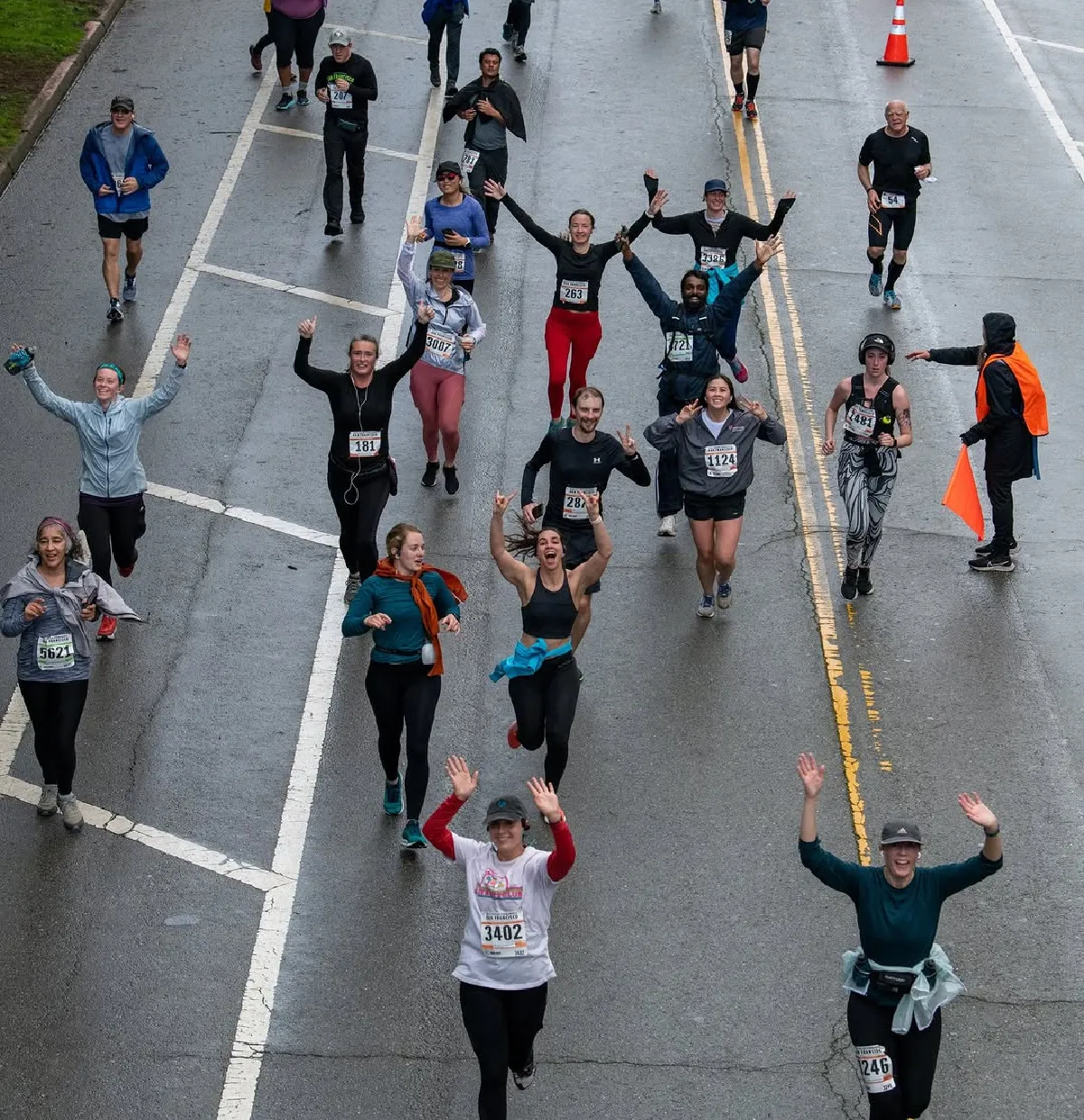
After years of coaching runners and racing everything from 5Ks to marathons, I’ve learned that the things that derail race day often aren’t huge training mistakes. They’re little decisions like starting too fast, waiting too long to fuel, lining up in the wrong corral or realizing 20 minutes before the start that the porta-potty line is approximately 400 people long.
Let’s talk through some of the most common race day mistakes runners make and, more importantly, what to do instead.
Race Day Tips From a Team of Run Coaches
These running tips apply whether you’re running a 5K, 10K, half marathon, marathon or more!
I love that we often want our half marathon race day tips to be drastically different than our beginner 5K tips.
Probably because we’ve put in so much more work than when we crossed that first 10K finish line, but the truth is a lot of things remain the same!
Unless you prefer to learn things the hard way, here are 8 mistakes to avoid for a great race and almost all of these tips have an additional article that dives in to detail.
Find the one you’re most concerned about and get all the tips to have your best marathon morning.
Mistake 1: Waiting Until Race Day to Make a Plan
Race morning is not the time to figure out where you’re parking, whether you need to take a shuttle or how far your hotel is from the starting line.
I’ve absolutely had those pre-race dreams where I’m desperately trying to get to the start and everything keeps going wrong. Unfortunately, that’s not always far from what happens when we don’t plan ahead.
Before race day, figure out:
- How you’re getting to the starting area
- Where parking or runner drop-off is located
- Whether you need to take a shuttle
- When roads around the course close
- How long it will take to walk from your hotel or parking area
- When gear check closes
- What time you actually need to leave
Then add more time than you think you’ll need.
Assume you’ll spend 10 to 20 minutes in a porta-potty line and want another 10 to 20 minutes to walk around, warm up, drop your gear and take in some last-minute fuel.
You don’t want to waste energy being stressed out or sprinting to the starting line before you’ve even started racing.
Mistake 2: Big Pre-race Dinner/New Foods
Checkout our ideas for pre-race meals to get you started on the right foot!
In it’s most simplistic terms, stop signing up for the all you can eat pasta dinner. It’s usually too much food, too much fat and not the way you normally eat. Over eating means all that food can make you feel sluggish in the morning or impair sleep as your body works to digest things it’s unaccustomed too.
Don’t be like 25-year-old me, starving after a race expo and wandering around trying to find anything nearby for dinner.
We didn’t have all the fantastic restaurant apps we have now, but I still could have planned that one better.
Race weekend is a great time to be boring with your food.
Research dinner options ahead of time and choose something similar to meals you’ve eaten before long runs. If you’re traveling, I also love grabbing a few groceries so you’re not completely dependent on whatever the hotel or nearby restaurants happen to have.
Bring your normal pre-race breakfast whenever possible. If you’ve trained with a bagel and nut butter, race morning isn’t the time to suddenly decide you should eat an enormous plate of pancakes because they’re included with the hotel. Stick with what you know works.
If you’re not sure what to eat, I’ve got a full guide on what to eat before a race.
“More marathons are won or lost in the porta-toilets than they are at the marathon…” – Bill Rodgers
Touche Bill, touche.
Mistake 3: Underestimating the Porta-Potty Situation
On a related note, just get in line.
Don’t convince yourself you don’t need to go because you’ll probably change your mind approximately three minutes before the start.
Bathroom lines at big races can easily take 10 to 20 minutes, so build that into your morning schedule.
And if you find yourself having that weird “do I actually need to pee again?” feeling as the race gets closer, remember that nerves can absolutely create that sensation.
If you have plenty of time, get back in line.
If the race is about to start and you already went recently, you might simply be feeling those pre-race nerves.
Either way, this is much easier to deal with when you haven’t arrived at the start with five minutes to spare.
Mistake 4: Forgetting Throw Away Clothes or Complicated Layers
Next up is what to remember on race morning: throw away clothes.
Energy is wasted shivering while you wait at the start line. Always bringing a few layers that you can toss in the donation piles as the countdown to racing begins.
Now that you have clothes you can toss at the start line, think about what you’ll feel like as you warm up during the race.
- Avoid tying anything around your waist, the extra material will become frustrating as the miles progress and you begin to fatigue.
- Pick up a cheap pair of gloves and long sleeve shirt from Target or Salvation Army, the couple of dollars is worth the extra comfort {lesson I’ve learned the hard way repeatedly…remember the Las Vegas race where I was actually picking up people’s throw away clothes to put on it was so cold?!}.
- Garbage bags are also the easiest way to keep warm and repel water if it’s raining!
- Double check anything with zippers to ensure it won’t rub or bother you on race day.
Mistake 5: Skipping Your Warm-Up
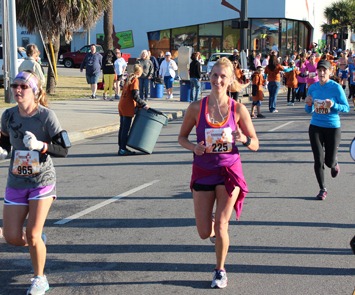
It’s easy to skip your dynamic warm-up on race morning (cough some of you skip it all the time).
But race morning is exactly when I want you to do at least a little something to tell your body, “Hey, we’re about to run.”
How much warm-up you need depends on your race.
For a 5K or 10K, you may want some easy jogging, dynamic movements like A Skips and strides because you’ll be running hard almost immediately.
For a half marathon, you don’t need a massive running warm-up. A short dynamic warm-up can get the joints moving and muscles ready, and then you can use the opening mile to continue settling in.
For a marathon, most runners don’t need to burn extra energy jogging around before the race. Some dynamic movements and walking are usually plenty.
The goal is to feel ready, not tired.
Mistake 6: Underestimating Chafing
On normal days a little anti-chafe skin lubricant on your thighs probably does the trick, but on race day it’s time to nearly bathe in the stuff.
Your gait and stride often change later in the race due to new levels of fatigue.
Clothing may also become more wet than normal from sweat.
These two factors make it critical to lubricate toes, heels, legs, under arms, around the waistband and men get those nipples. Male runners often find it’s necessary to wear band aids for additional protection {an awkward band aid is way better than a bloody shirt}.
Mistake 7: Skipping Electrolytes (Sodium)
When we sweat, we’re not just losing water. We’re also losing electrolytes, including sodium.
And the amount of sodium each runner loses can be VERY different.
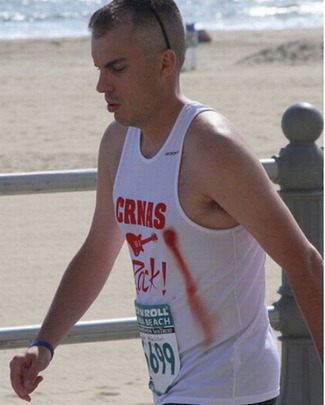
You probably know someone who finishes a summer run with white streaks all over their hat or shirt. That’s an easy visual clue that they’re losing a fair amount of salt in their sweat (me).
Meanwhile, someone else can do the exact same run and barely see any salt residue at all (my husband).
That’s why I don’t love blanket advice telling every runner to take the exact same amount of sodium.
Your needs depend on how much you sweat, how salty your sweat is, how long you’re running and the conditions on race day.
For a short race in cool weather, you may not need to think much about electrolytes at all.
But if you’re running a half marathon or marathon, especially in warm or humid conditions, sodium and hydration become much more important pieces of your race plan.
Mistake 8:Obsessing Over Your Watch Pace
While we often have a PR (personal record) goal in mind, I’ve found that by focusing on how you feel instead of the watch you often run a better race.
You might PR unexpectedly because you don’t hold yourself back or you might run a slower race, but know that you did your best because it was all the effort you had available.
- Remember your watch may not match the mile markers exactly
- The course measurements are the most accurate and determine your final time
- Keep checking in with your breathing, posture and overall feel instead of just looking at your watch
Tips for pacing your marathon >>
Picking the right goal race pace can help >>
Half Marathon Pace Chart >>
Mistake 9: Not Asking Family for Support
This one gets overlooked, but has turned around so many races it can’t be skipped.
We often feel like our training alone takes up so much time that we shouldn’t ask for anything more. But consistently I hear (and have experienced) my athletes say that nothing gave them a bigger boost than coming upon a friend, husband or child during the race.
Whether you stop for a hug or just know they are there rooting you on, it puts some extra oomph in your step when you might be ready to slow down.
Send them these great race sign ideas >>
Mistake 10: Not Fueling Because You Feel Good
Or you aren’t hungry. Fueling during an endurance race is preventative.
We don’t wait until we’re completely out of energy and then try to fix it. Remember it takes 30 to 40 minutes for that gel to make it through your gut and out to your legs! Fuel early and fuel often.
- 60 to 90 grams of carbs per hour is the recommendation for most
- Use a combination of liquid nutrition, energy chews, or gels to help get there
But race day is NOT the time to suddenly jump from the 30 grams per hour you practiced to 90 because you’re reading it’s optimal. Your gut will not agree.
I’ve also put together a much more detailed guide to half marathon fueling if you need more guidance.
Mistake 11: Forgetting to Make a Finish Line Plan
Crossing the finish line feels like the end of everything you’ve been planning for. And then you realize you’re cold, hungry, can’t find your family and have absolutely no idea where you’re supposed to go.
I’ve spent plenty of time wandering around finish areas trying to locate people while becoming progressively colder and more annoyed. Yes, you have cell phones…but sometimes they just don’t work in these crazy crowded places.
Take five minutes before the race to make a plan.
- Look at the finish-area map and choose a specific meeting location for friends and family.
- Let them know it may take a while to get through the finish chute, collect your medal, grab food and retrieve a gear bag.
- If it’s going to be cold, check a bag with dry clothes.
- Body wipes can also be fantastic if you’re going to be hanging around for a while.
And if you have a sensitive stomach, don’t assume the post-race food will work for you. Toss one of your normal snacks into your checked bag so you know you’ll have something you can eat. You may not feel like eating, but getting in that post run fuel is really going to speed up recovery.
Mistake 12: Expect it to Get Hard
One of the biggest mental mistakes runners make is believing a great race should somehow feel easy.
Even when everything goes perfectly, racing gets uncomfortable.
Remind yourself that discomfort doesn’t automatically mean something is going wrong. Shifting in to the idea that you want to lean in to some discomfort can help take the fear away when it shows up and help you keep pushing.
A few more mental reminders
- Practice gratitude during the race – reaching to say thanks will absolutely help pull you up
- Remember this is supposed to be fun!!!
- Take a second to connect to a runner around you, sometimes the shift in perspective is all you need
- Start using mantras – they work!
Looking for more race preparation:
- How to fuel during a marathon
- Marathon Pacing Strategy
- Avoid marathon training burnout
- Half marathon pacing strategy



 Half Marathon Pacing Strategy: How to Pace Your Best 13.1