

Running a marathon in the rain doesn’t have to suck if you have the right gear and mindset. Who remembers the 2018 Boston Marathon when we all were glued to the TV watching Des Linden (and many other runners) grinding it out in the pouring rain?
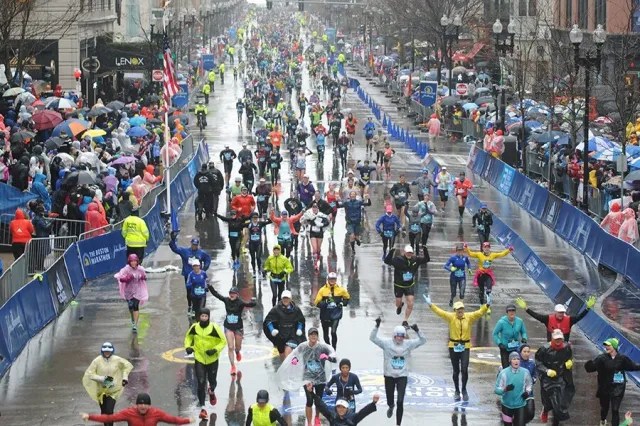
It didn’t matter what they were wearing, they had a mindset of moving forward.
Marathons happen rain or shine. It’s why we run coaches are always saying it’s important to practice running in all weather conditions. You’ll be more prepared for whatever race day gives.
Rain is rarely cause for race cancellation. Thunder, lightning, and severe winds are all reasons why race directors have cancelled marathons in the wee hours of the morning. And yes those cancellations are usually last minute as everyone waits hoping the weather moves through.
Knowing this, let’s talk about what to do if you find yourself with a rainy race day forecast!
Running A Marathon In the Rain Preparation
While none of us have a magic wand to get rid of the forecasted rain, there are a few things that you can do pre-race to help make the day go a little smoother.
Make sure that you’re checking the race website, social feeds, and have alerts set up so that you don’t miss any communications from the race director.
#1 Be Flexible With Your Plan
A rainy race day does NOT mean you can’t hit your personal best goals. But the associated temperature or the volume of rain, may require some adjustments to your plan.
A. It’s a nice temperate day and a drizzle – follow your plan, no changes.
B. It’s a temperate day with a heavy downpour – you may find it more mentally challenging and your shoes could get heavier as wet. So adjusting paces will be around watching your effort level and HR.
C. It’s cold and more than a drizzle…read on.
Depending on whether it’s a drizzle vs a downpour and how warm or cold it is, you may need to modify your race day goals.
A study showed that when it’s cold and raining, your body is going to use more energy to keep warm. That increased HR may result in a decrease in your performance or ability to hit those faster goal paces.
Due to that increased energy expenditure, you may need to adjust your fueling and hydration plan. Burning more carbs means you need to take in even more carbs. Set alerts on your watch if needed to remind you to take something every 20-30 minutes.  It can be frustrating to modify your goal after training for months. But adjusting for weather is just part of the game and extra important when it comes to safety.
Things are going to happen on race day that are simply outside of your control, and being flexible is so important.
#2 Start Line Gear Planning
We will get to what to wear during the race below, but first you need to think about how to stay as dry and warm as possible before the race.
Not all race locations will have a dry place to hang out, so plan ahead. This is about starting the race feeling good, not about avoiding the rain all day.
- Do not wear flip flops or slides to the start, putting dry socks on wet feet is a good way to get blisters later.
- Consider wearing old shoes to the starting line and then switch into your race day shoes prior to the start.
- Or put your feet inside plastic bags and tape around your ankles. Looks silly, but we will take silly over blisters. (Obviously remove the bags to start running!!)
- Wearing a trash bag is another go to move for keeping your upper body dry prior to starting.
- Or buy a big pack of ponchos on amazon – you’ll be the star of the corral for sharing. We don’t recommend running too far in one unless it’s cold, as you’ll become a heat bubble.
- Hand warmers and gloves can also help keep your body temp up
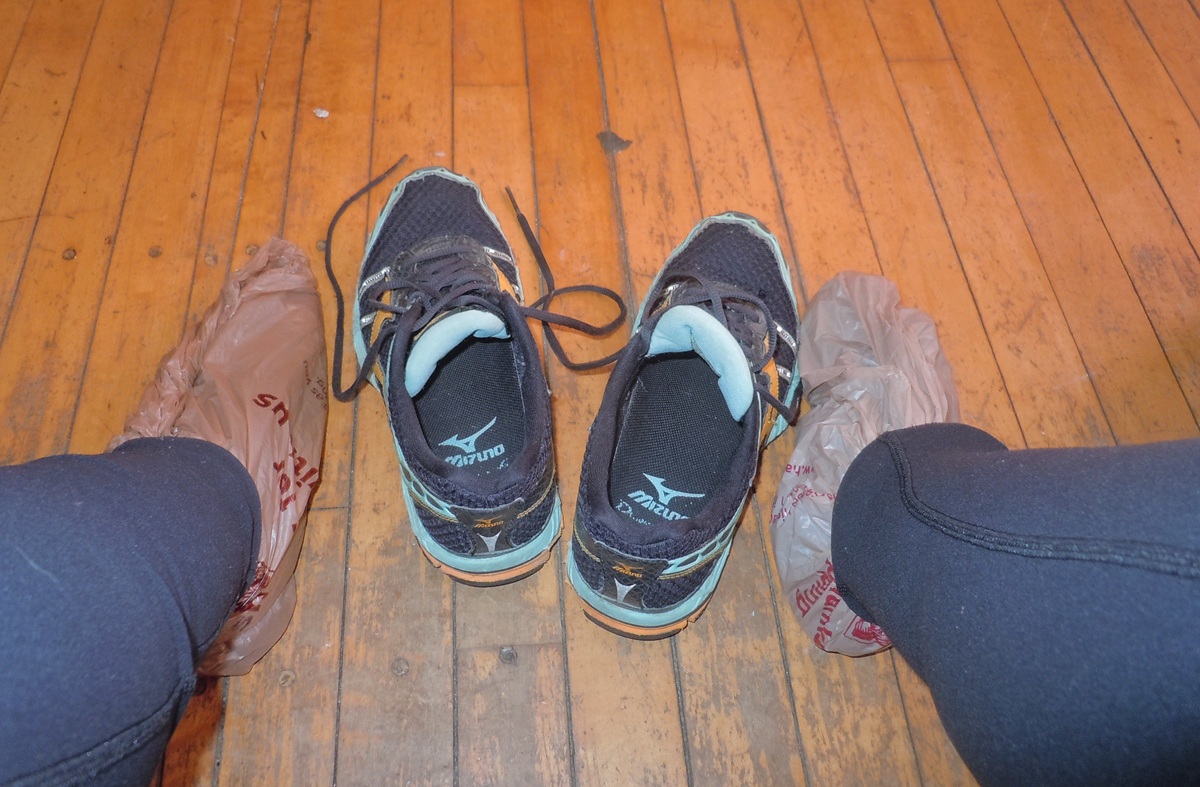
If you can’t find plastic bags, shower caps and smaller trash bags will also do the trick!
If you’re going to have family or friends on the course, give them dry gear to hold onto so that when you run by, you can swap out for dry gloves, hat, or even an outer layer.
Sure, it’s just going to get wet again, but a little break from being sopping wet will for sure give a little mood boost.
#3 Re-think Race Day Shoes
Unfortunately, if it’s raining on race day and you planned to wear some carbon plated shoes you may need to reconsider. Most of them have very little rubber on the outsole to keep weight down, but that means they can also slip and slide.
Pay extra attention on the painted stripes of the road or if you’re racing on a boardwalk, be particularly alert for slick boards.
Don’t overthink this or freak yourself out, but know that footing may be different than on dry days. Again this is where having run in adverse weather conditions will make you feel more confident.
Depending on how heavy the rains are expected to be, you could wear waterproof shoes.
Remember that they’re usually trail shoes, feel warmer or can be heavier. If you didn’t train in them, now is not the time to run 26.2 miles in waterproof shoes.
#4 Duct Tape Your Running Shoes
This is a BRILLIANT idea from So What I Run. What’s worse than that moment you splash in to a puddle and feel your sock soak up the water. This isn’t going to keep you 100% dry, but so much better!!
Basically, it’s exactly what it sounds like!! You’ll be using that tape to create a barrier for water and help keep your feet dry with the hopes of preventing blisters.
Just remember this also means your shoe is less breathable or could feel less flexible.
If you do not want to duct tape your shoes, you could wear an old pair of running shoes to the start and then right before the race begins, switch over to dry shoes, and then just embrace your feet getting wet as the race goes.
#5 Still Do Your Warm Up
I’ve been there plenty of rainy race day mornings where all I wanted to do was simply stand still in the corral and ask myself over and over again why I’m doing this. This is likely when your warm up is even more important because your muscles are tight and stiff from shivering or being tense.
As close to the start time as possible, do a little dynamic warm-up to get your body warm and ready to run, but also distract yourself from waiting around for the race to get started.
Avoid doing the warm-up too early because then your body is going to cool down and get cold again.
#6 Embrace the Weather
Crappy weather on race day sucks. But instead of being miserable, change your mindset about the day and embrace the weather.
If you start the race with a negative mindset, it’s going to set the tone for the entire 26.2 miles.
Think about when you were a kid and you couldn’t wait to get outside to jump around in the puddles. The same goes for running a marathon in the rain. This is a wild experience and look at you out here just DOING IT!
What to Wear for a Rainy Marathon
Our team has tried SO many pieces of gear that if we added them all to this list, it would go on forever. So we’ve put together our top 10 categories to help make running a marathon in the run a little more enjoyable.
#1 A Good Jacket
When deciding between a waterproof jacket and a water repellent running jacket, it’s important to consider the conditions you’ll be running in. If your race is forecasted to have heavy rain, a waterproof jacket may be a better choice. If the forecast shows light rain or drizzle, a water repellent jacket may be sufficient.
In either case, it’s important to look for a jacket with good ventilation options to prevent overheating and discomfort during your marathon.
Check out our list of the 10 best rain running jackets here >>
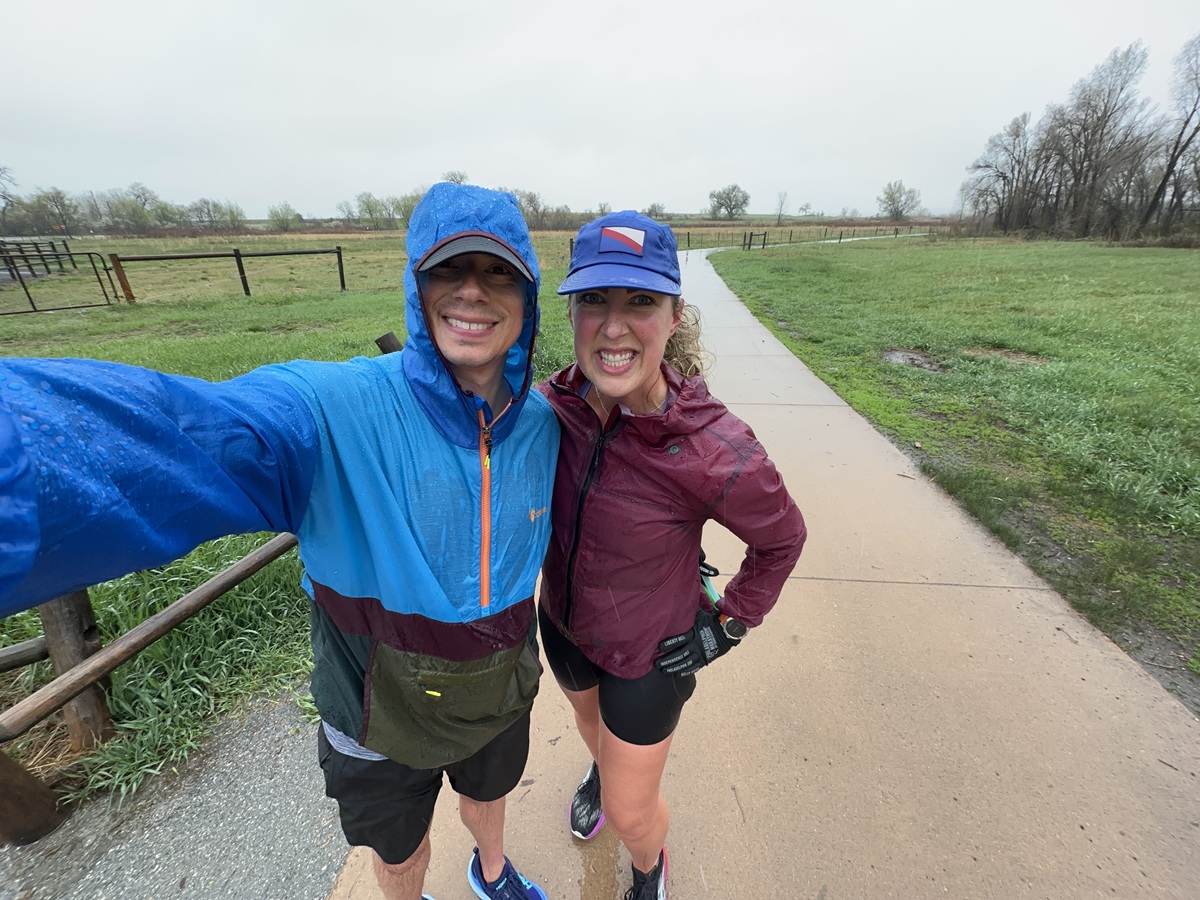 It’s important to know the difference between waterproof and water-resistant. Grabbing the wrong type of material can result in you chucking it to the side of the course and just being wet, regretting it later.
Waterproof
This means that it is designed to totally block water from reaching your body. The result of this most often is a jacket that’s a little stiffer (think Gore-Tex) and doesn’t allow your body to breathe, making it like a little sweatbox.
More and more jackets are claiming to be waterproof and breathable, which is obviously much better for runners but most still report these jackets can get warm.
Water-Resistant
These are what you might often think of as a windbreaker, they’re usually very lightweight and good in a light drizzle or a short light rain. They aren’t going to keep you dry in heavier or longer-lasting rain.
Based on the above if it’s warm outside, you’re probably better off just embracing the wet.
But when it’s cool, the jacket is key because it’s going to prevent your body temperature from dropping. If your core is working hard to warm up it will pull blood from fingers, toes, and limbs.
#2 Moisture-wicking Socks
Regular cotton socks just won’t do when it’s raining, they’ll soak up all the water and you’ll have blisters.
Look for moisture-wicking socks which will help prevent blisters and also keep your feet as dry as possible.
We highly recommend wool socks for any temperature, here are some of my favorite wool running socks. Bonus points because they’re quick drying and warm on cool days, but not on hot days.
⭐️#3 Hat with a Brim
You want a hat that will keep the rain from going straight into your eyes. This reduces the annoyance factor a LOT.
A waterproof one is a great option in the cold as that will also keep your head protected (and warm!). If it gets super cold outside, you can layer it with a headband or a beanie, underneath the waterproof cap.
Sumolux has running waterproof hats that come in a variety of colors for just $15. A great option to have on hand!
But ANY hat will do as the mental factor is huge.
#4 Compression Shorts or Tights
While it might seem counter intuitive, we actually don’t want loose clothing. The closer fit is going to wick faster and usually dry faster.
Wearing tighter-fitting running gear will also prevent your skin from rubbing together and causing unwanted chafing. Even if you loaded up on body anti-chafe balm, there’s still a chance for it to happen so if you can avoid it by wearing compression shorts or tights it’s worth it.
Oh, and avoid cotton at all costs, you will thank us later!!
#5 Anti-Chafe Balm
Blisters due to chafing can be a real problem while running in the rain. The additional friction from wet clothes makes it more common to find yourself chaffed.
Grab an anti-chafe balm or even petroleum jelly such as Vaseline and rub it anywhere you feel you’ll need it such as your feet, arms, legs, or even the seam lines of clothing.
#6 Clear Glasses
Even if you’re wearing a hat, depending on how bad it’s raining, you may get quite a bit of water in your eyes. If you’re someone who wears contact lenses, having an extra layer of protection like a pair of clear glasses will prevent any issues and help you see clearly.
This pair from Vinco is perfect and they won’t fog up.
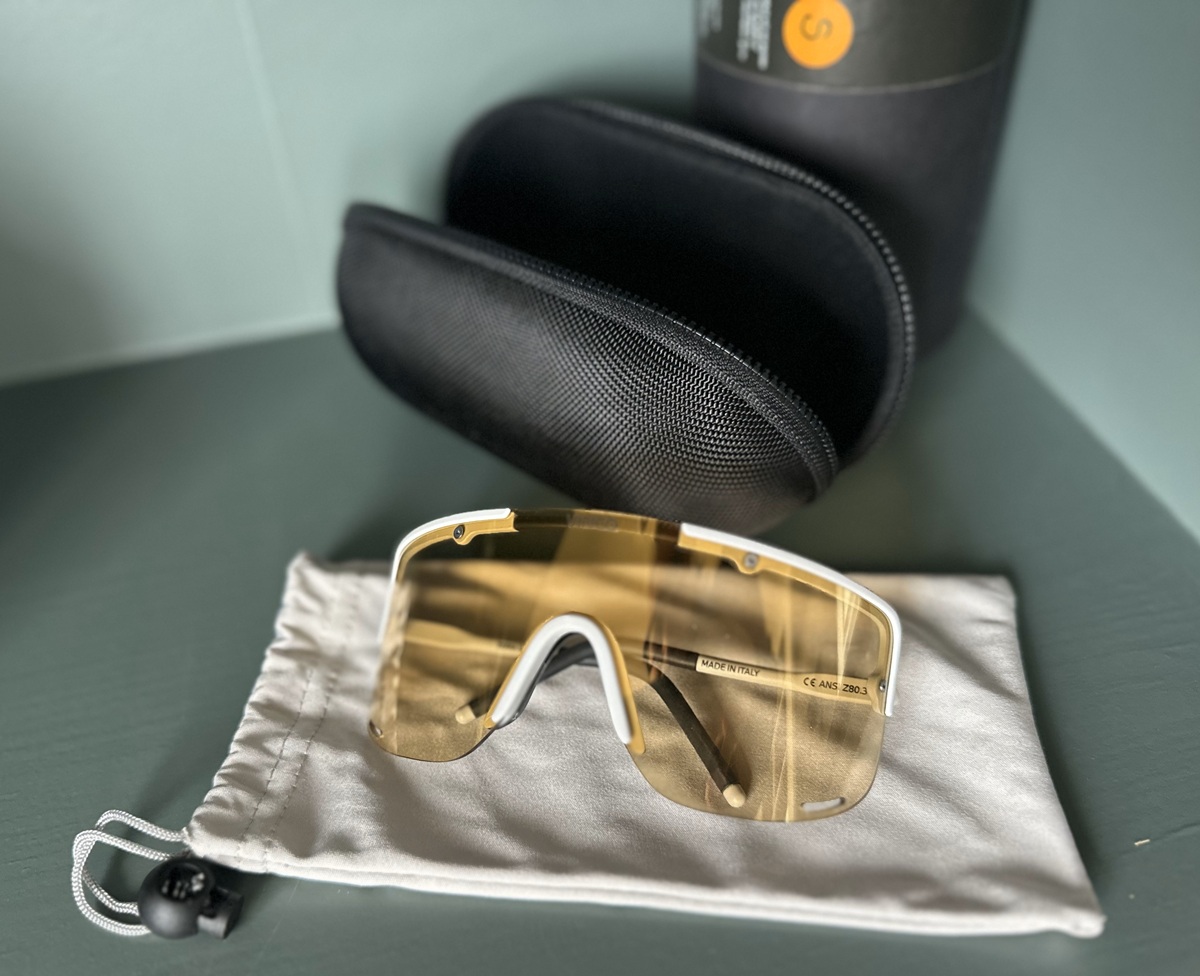 I started wearing similar sunglasses that are clear or transition lenses and it really just adds to that mental relief of not feeling like you’re being pelted.
You can also use an anti-fog lens cleaner to avoid any fogging!
Cold Rainy Marathon Gear
A few bonus items if you’ll be dealing with chilly temps.
First remember this is when that water proof jacket is going to feel better and next it’s time to layer up.
#7 Gloves
I think having wet and cold hands is the absolutely worst part of running in the rain. I remember after one race I couldn’t even use my phone because my fingers were so cold and pruny.
Layering your gloves is going to be key. Put a thinner pair on the bottom and then another pair on top to keep your hands extra dry. The top layer could be anything from a regular pair of gloves, rubber gloves, or even like in this picture gardening gloves.
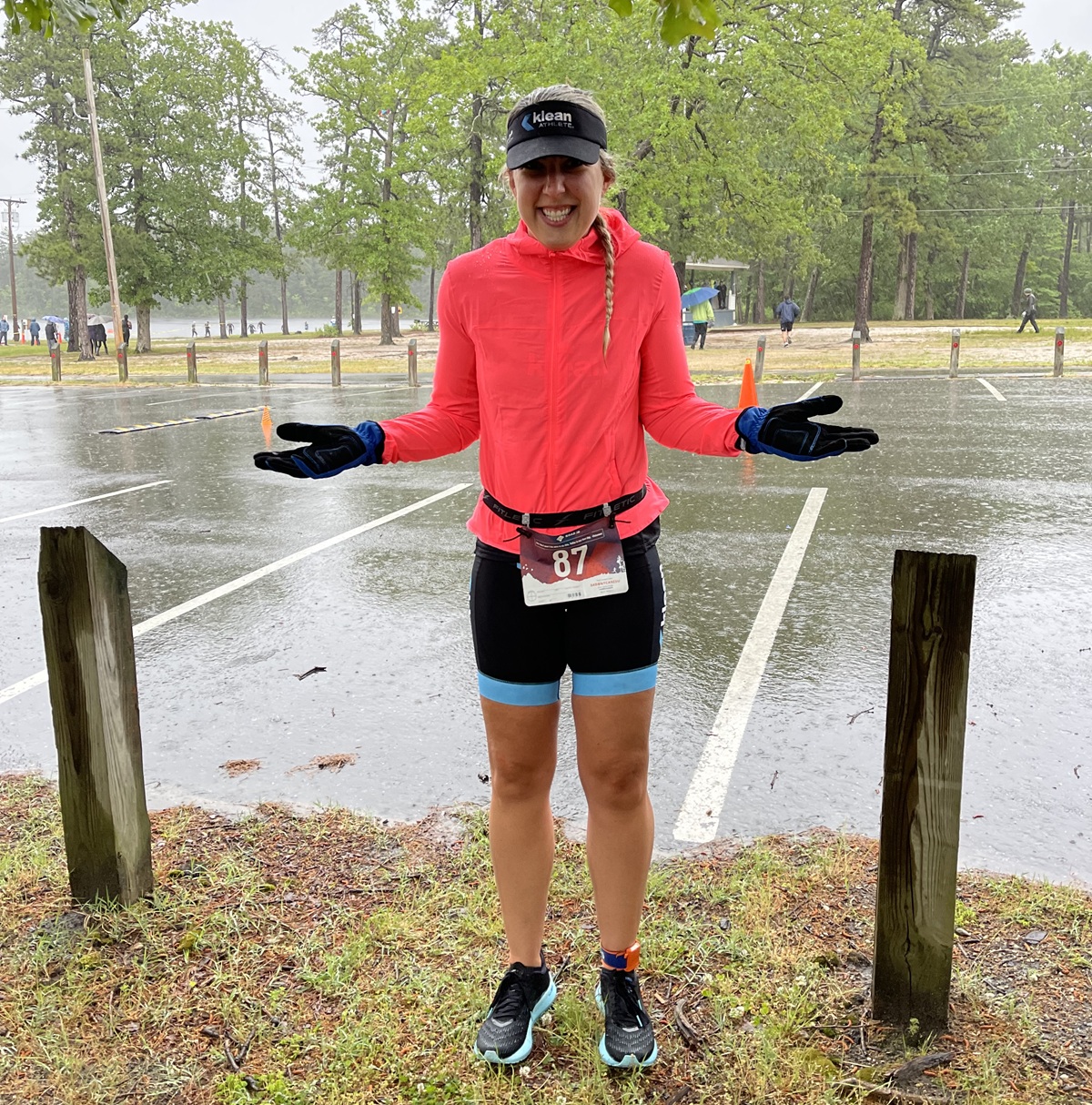 Buy throw away running gloves to wear at the start of your race and while standing at the start line. When you warm up a few miles in, you can toss them without feeling bad about it!
#8 Wool Layers
The right running base layer is going to be really useful on a cold wet day. We want something next to your skin that can help to pull moisture away and keep you from getting chilled.
While it’s tempting to leave on your throw away layers, don’t. Coach Amanda vividly remembers leaving on her long sleeve cotton throw away because it was cold and wet, only to realize by mile 13 it was making her feel even worse! That layer is now holding in all the cold rain and keeping it on your body.
You may be surprised to find that less is more in situations where it’s cool, but not cold enough to snow.
We did a deep dive on what to wear running at every temperature to help you make choices >>
#9 Hand Warmers
Don’t ditch those hand warmers from the start line! You might put one under your hat for awhile or shove them in a sports bra or just carry them.
Remember that your body will first try to keep your core warm to protect your organs before it worries about your extremities. That’s why the layers or a running vest can help your hands to feel better.
BUT you will heat up the longer you run. So hand warmers can help get you through those early miles where everything feels really cold as your body warms up, thus ensuring you aren’t overlayered.
#10 Hydration Vest
Even if you’re going to rely on the aid stations on the course, use a vest or running belt to store all of your personal items and nutrition. Put your cell phone, ID, and even keys in a ziploc bag and throw it in one of the many pockets that hydration vests often come with.
You just have to embrace that everything is going to be wet, but if you can put some layers between it’ll help keep things from being absolutely soaked.
One of Coach Amanda’s favorite hydration vests is the On Running Ultra Vest. It’s super lightweight and comes in sizes XXX to XL.
Post-Race Running a Race in the Rain Reminders
To avoid blisters or other issues after a running a race in the rain get your wet gear off as soon as possible.
Pack a dry towel in your car to dry off your feet and put on warm socks. Now you’re ready for fresh shoes or recovery slides if that’s more comfortable. Yes, we approve of socks and sandals in this situation.
- If you can find warm broth or other liquids, that’s an ideal way to get your core temperature back up and start refueling.
- You will likely start to feel much colder about 20-30 minutes after finishing. Don’t just stand around and wait for friends, have a checked bag to quickly change in to warm dry clothing.
- DO NOT throw your running shoes in the dryer. Here’s how to dry running shoes >>
- Continue refueling and enjoy every bit of that long hot shower when you make it home…hopefully blister free thanks to all of these tips!
The best way that you can prepare for running a marathon in the rain is to not avoid it during training. Rainy training runs will help you see what gear works or doesn’t work for you.
You’ll also learn what your body needs, whether it’s slowing down, more fuel or just adding extra layers to stay warm. Without practicing any of this, you’re going to be in for a lot of surprises on race day that you could’ve potentially avoided.
We hope that these tips and tricks help you feel more prepared to race in rainy day conditions.



 TOPO MTN Racer 4 Review | More of a Good Thing
Leave a Reply